EN
EN DE
DE ES
ES FR
FR NL
NL PT
PT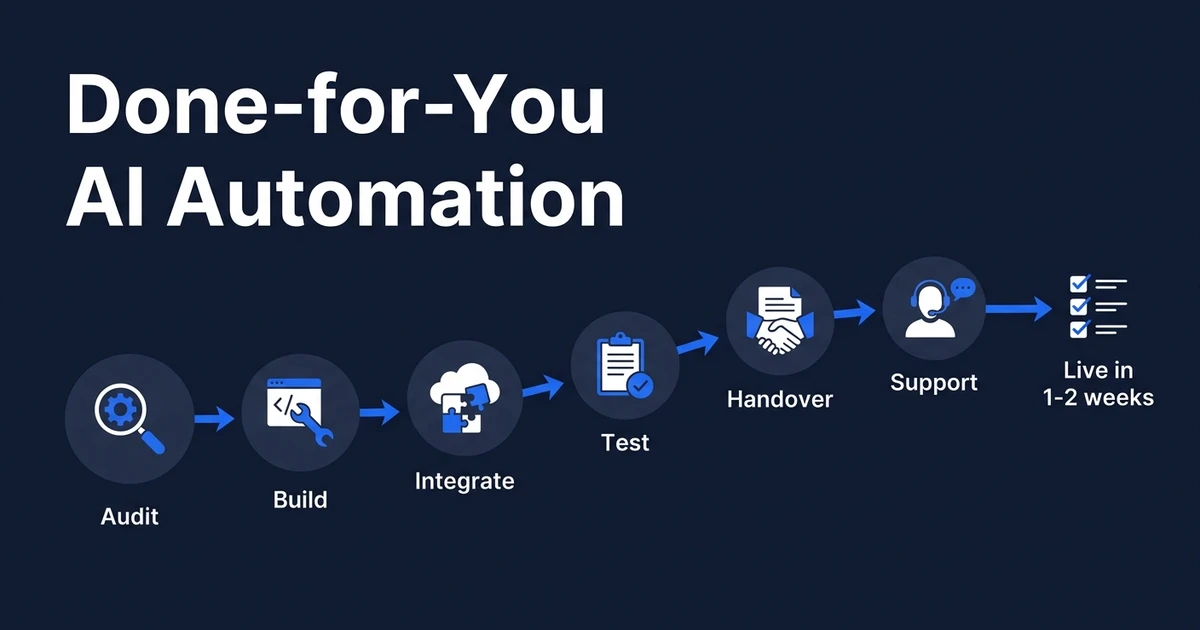
Quick Answer: Done-for-you AI automation is a fixed-scope service where a provider audits your workflows, builds the automations, integrates them into the CRM, email, calendar, and phone you already use, tests against real data, hands over a working system, and supports it after launch. A credible offer shows the workflow map, deliverables, timeline, and support window before asking for payment.
You already know AI can save your team twenty or more hours a week. The question is who actually builds it. This guide walks through what a real done-for-you AI automation engagement includes, what a provider should hand you before payment, and how to evaluate one offer against another.
The U.S. Chamber of Commerce found that 58% of small businesses now use AI, up from 23% in 2023 in its 2025 Empowering Small Business report. The ones recovering time are the ones with working systems, not the ones still evaluating tools.
What Done-for-You AI Automation Actually Includes
It is a service model. You buy a working outcome, not a tool subscription or a learning curve. A real engagement covers the whole lifecycle:

- Workflow audit. The provider maps where you lose hours today (lead response, CRM entry, scheduling, document work, follow-up).
- Build. They design and build each automation using established tools like n8n, Make, OpenAI, and Voiceflow.
- Integration. They connect the build into your existing stack: HubSpot or Pipedrive, Gmail or Outlook, Calendly, your phone system.
- Testing. They run the workflow against your real data and catch the edge cases before it touches a customer.
- Handover. You get clear documentation and a recorded walkthrough so your team understands what was built.
- Support. A defined window where the provider fixes anything that breaks at no extra cost.
What you should not get is a “strategy deck” with no build, an hourly retainer with no fixed deliverable, or a generic agent template applied without integration into your tools.
The full scope lives on the done-for-you service page.
What a Provider Should Build Before You Pay
Anyone can quote a price. The proof of a credible offer is what shows up before the invoice.
Before you pay, a serious provider should give you four artifacts:
- A documented map of the workflows they will automate (current state vs. target state).
- A scoped list of integrations they will build (each tool, each direction of data flow).
- A timeline broken into milestones, not a single “1-2 weeks” promise.
- A clear definition of done for each workflow: the trigger, the action, and the success metric.
The AI workflow design step is usually where weak providers cut corners. If the audit is a thirty-minute call and a one-page summary, the build will inherit those gaps and break in production.
The Federal Reserve found that about 18% of firms have adopted AI, but 78% of the labor force works at firms that have in its April 2026 Monitoring AI Adoption note covering year-end 2025 data. Small businesses are not behind on intent. They are behind on execution. The right done-for-you partner closes that gap with detailed scoping before the first build session.
Done-for-You AI Automation vs DIY Automation Tools
DIY platforms are good tools. They are not the problem. The problem is who runs them.
A done-for-you build uses the same tools a DIY user would touch (n8n, Make, Zapier), but the buyer never has to learn the interface, debug a failed run, or maintain the workflow when something upstream changes. The provider owns the system.
McKinsey found that 57% of U.S. work hours could be automated with technology that exists today in its 2025 AI in the Workplace report. The technology is the easy part. Operating it is where most businesses get stuck.
DIY makes sense when:
- You have one well-defined workflow with no dependencies.
- Someone on your team has time to learn the tool and patience to maintain it.
- You are willing to accept downtime when an upstream tool changes.
Done-for-you makes sense when you would rather pay once for a working system than commit ongoing internal hours to building, fixing, and maintaining one.
Done-for-You vs Hiring an Internal Automation Specialist
The other alternative is hiring someone in-house. A full automation engineer in the U.S. earns between $137,000 and $176,000 in base salary, and the total first-year cost typically exceeds $200,000 once you include recruitment, onboarding, hardware, and software based on Eastgate Software’s 2025 cost breakdown.
That cost only pays off if you have years of automation work queued up. For most small businesses with five to twenty-five people, the real queue is six to twelve workflows, not a permanent role.
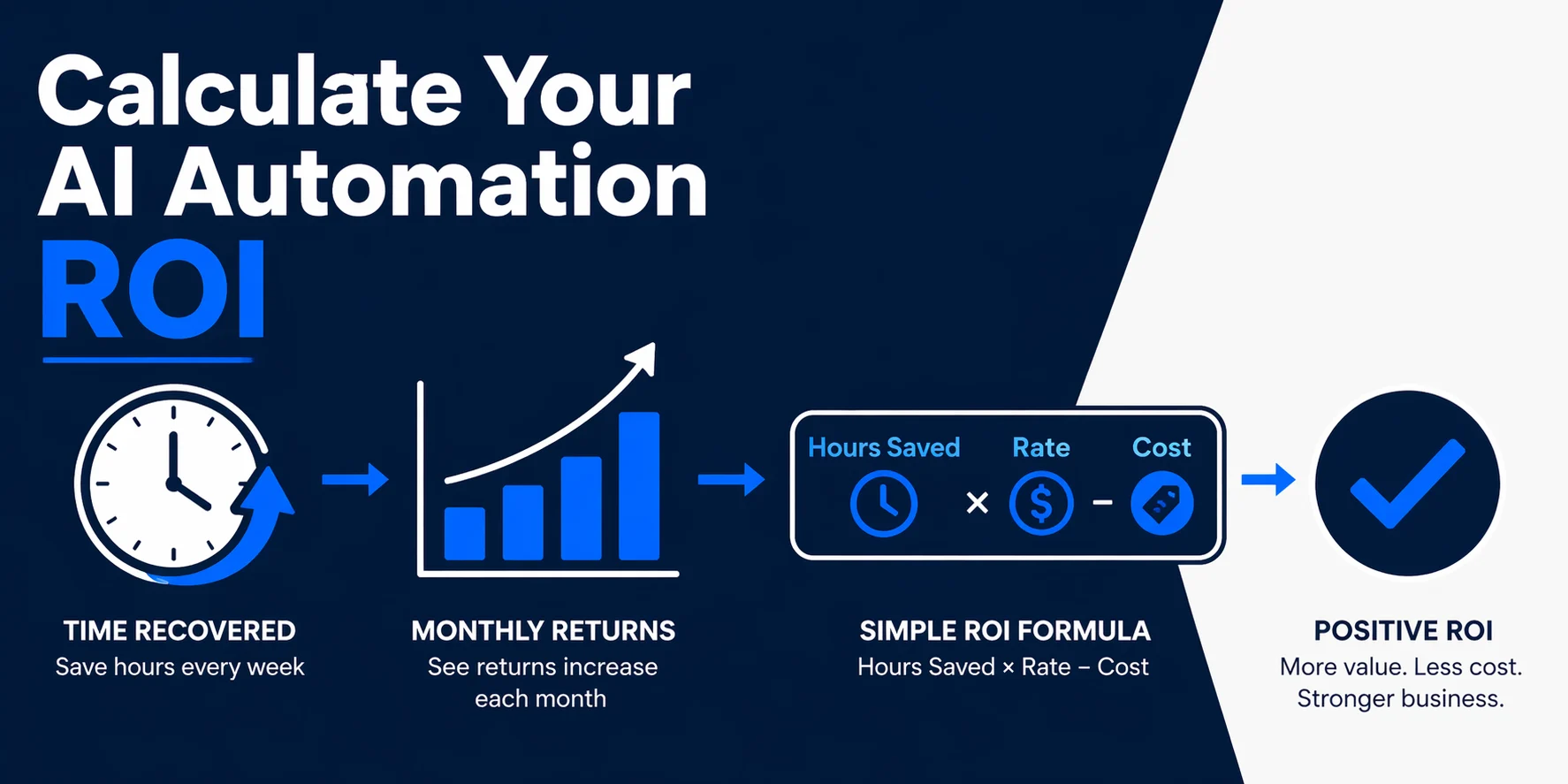
Automiq AI is sized for that reality: a fixed-fee engagement, a one to two week build, and a system that runs without an internal hire. For a side-by-side cost view, the AI automation ROI guide walks through hours recovered against fixed fee vs. salaried hire.
What Deliverables to Expect in the First 1–2 Weeks
A real done-for-you engagement has visible checkpoints. By the end of the first week, you should already have artifacts in your hands.
Week one deliverables:
- Documented workflow audit covering current state and target state for each automation.
- Final scope: which workflows are in this engagement, which are not.
- Integration plan: every tool, every account, every credential.
- A working draft of at least one automation running in a sandbox environment.
Week two deliverables:
- Full builds for every scoped workflow.
- Integration into your live tools.
- Testing against real (not synthetic) data.
- A handover session with recorded walkthrough.
- A defined post-launch support window.
If the first week ends without a documented scope and integration plan, that is the signal to pause and clarify. Most failed engagements fail in week one, not week three.
To match these deliverables to a tier, the Automiq AI pricing page lists what each package includes and the time recovery range it targets.
How to Spot a Weak Done-for-You Automation Offer
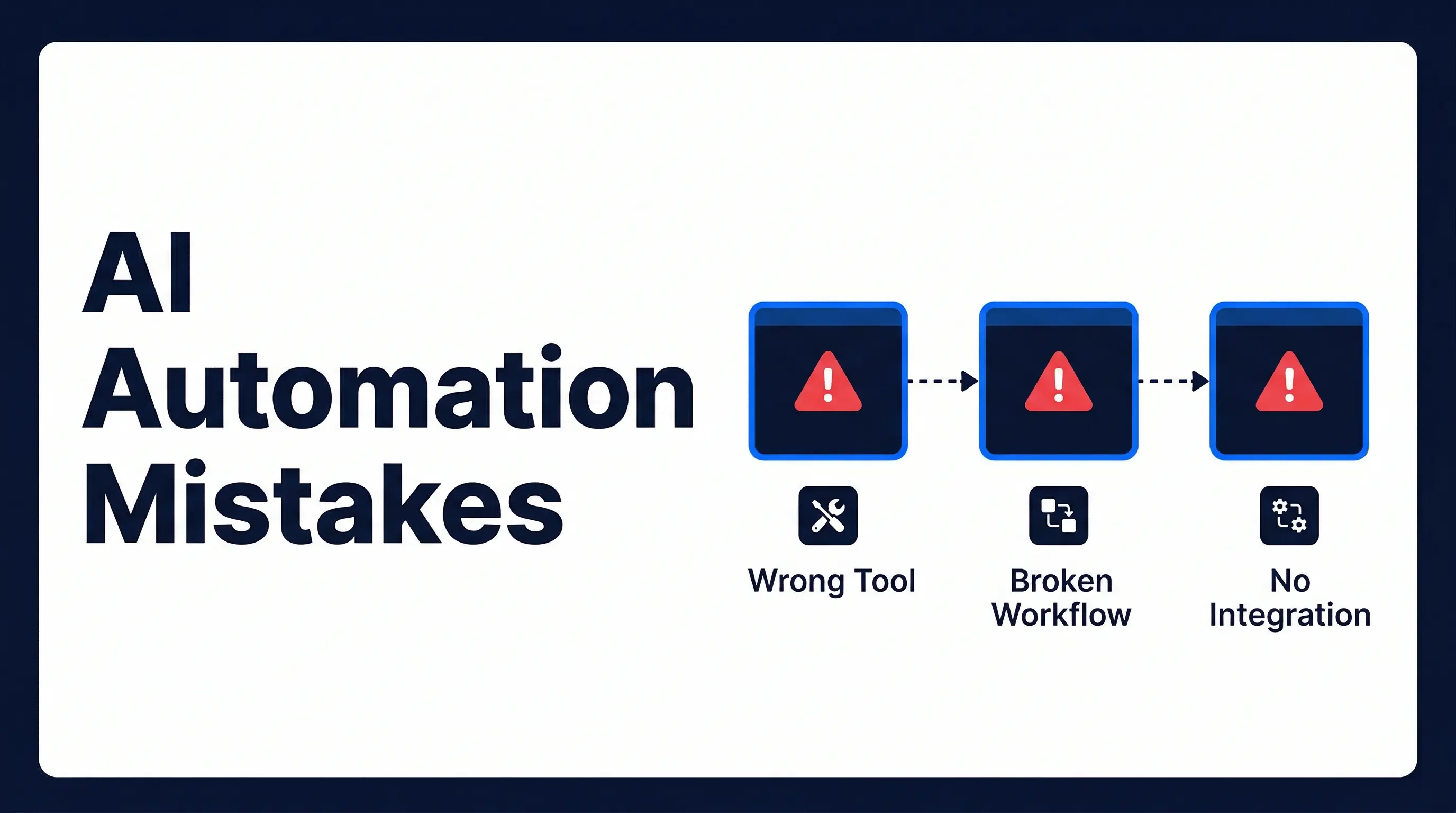
Some providers sell the label without delivering the substance. The red flags are predictable:
- The proposal is mostly strategy and very little build.
- Pricing is hourly with no fixed deliverable or success metric.
- Integrations are described in general terms (“we connect to your CRM”) with no list of accounts, fields, or data direction.
- There is no testing phase against your real data.
- There is no post-launch support window, or the support is “extra”.
- The provider cannot show a workflow they have built end to end for a similar business.
If a quote feels like a consulting deck dressed as a build, it probably is. Ask the provider to show you the system, not the slides.
Is Automiq AI the Right Done-for-You Partner for Your Business?
Automiq AI is built for a specific buyer profile. It is a fit when:
- Your team is two to twenty-five people.
- You already use a CRM, email, calendar, and phone system.
- You have at least three to six repeatable workflows draining ten or more hours a week.
- You want a fixed-fee engagement, not an ongoing retainer.
- You are ready to share real workflow data, not just describe it on a call.
It is not a fit when:
- You are a solo operator with one task to automate (a freelancer is cheaper and faster).
- You have no live tools yet (we cannot integrate with a stack that does not exist).
- You want a strategy deck with no build (we deliver working systems, not reports).
The Federal Reserve also reported that 27% of generative AI users save more than 9 hours per week in the same April 2026 note. That upside only lands if the system is built and connected to your tools, not parked in a pilot.
Frequently Asked Questions
What does done-for-you AI automation actually cost?
Pricing varies by scope. Most engagements range from $99 to $499 for a single workflow, $699 to $1,699 for a multi-workflow package, and custom pricing for a full transformation that includes a voice agent and ongoing optimization. A credible provider publishes scope and time recovery per tier.
How long does a done-for-you build take?
Most builds land in one to two weeks from discovery call to live system. Larger engagements with a voice agent or multiple integrations can run three to four weeks. Week one should already include a documented scope and integration plan, not just kickoff calls.
Is this just consulting with extra steps?
No. Consulting delivers decks. Done-for-you delivers a running system inside the tools you already use. The deliverable should be a working workflow integrated into your CRM, email, calendar, and phone, not a slide on what could be built.
What happens after the provider hands over?
A credible provider gives you a defined post-launch support window where they fix issues at no extra charge. Documentation, recorded walkthroughs, and clear escalation paths should also be part of the handover. After the window, you can renew, request changes, or run the system yourself.
How do I know a provider can actually deliver?
Ask to see a workflow they built end to end for a business like yours. Ask how they will test against your real data, what their handover documentation looks like, and what is included in their post-launch support. Vague answers are the answer.
Conclusion
The reason most teams stay stuck on manual work is not the price of AI. It is the gap between knowing the work can be automated and having someone available to actually build it. A credible engagement closes that gap with a fixed scope, working deliverables in one to two weeks, and accountability after handoff.
Before you sign, ask for the workflow map, the integration plan, the testing approach, and the support window. If a provider has those four artifacts ready before payment, they probably have the operational practice to deliver.
Book a free discovery call and walk away with a custom automation blueprint for your business, even if you do not hire us in the end.