EN
EN DE
DE ES
ES FR
FR NL
NL PT
PT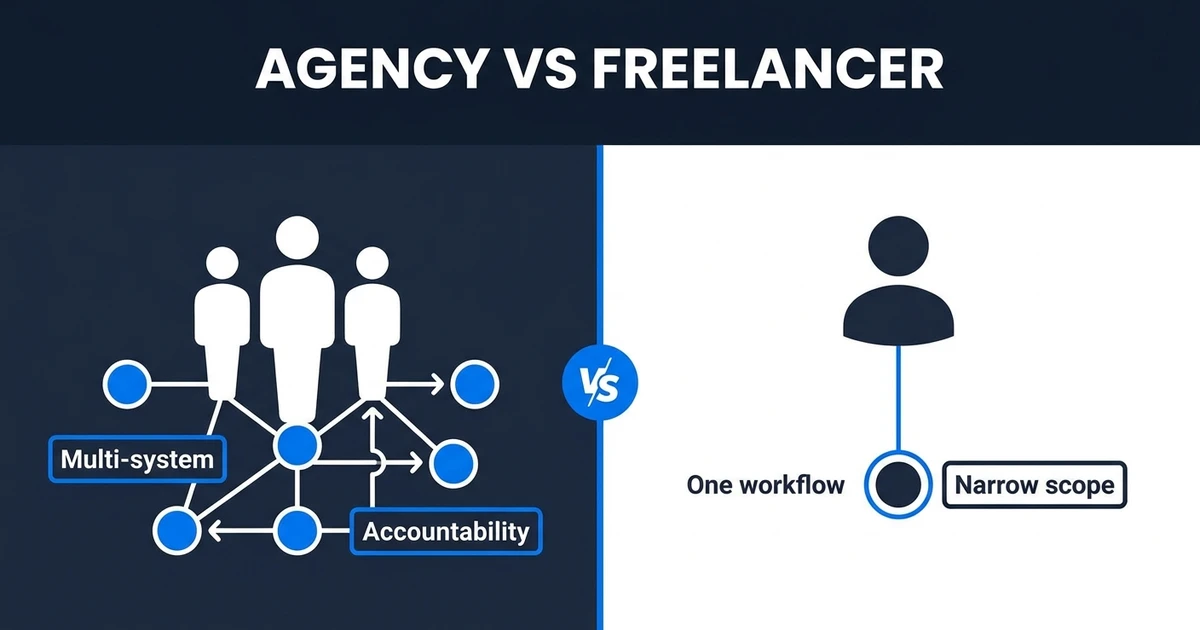
Quick Answer: Hire an AI automation freelancer when the scope is narrow and contained: one workflow, one tool, owner ready to operate it after delivery. Hire an AI automation agency when the workflow crosses systems, touches customer communication, needs testing, and has to keep running after launch. The deciding variable is not price. It is who is on the hook the day after launch, because most AI projects fail at handoff, not in the build.
If you are choosing between an AI automation agency vs freelancer, the comparison usually gets framed around price. That is the wrong frame. The right one is what happens the day after your project goes live, when something upstream changes and your workflow stops working at 2 a.m.
This guide compares both options across cost, risk, speed, and post-launch accountability, then lists the red flags that signal failure before you sign.
Quick Answer: Agency, Freelancer, DIY, or Internal Hire?
Most small businesses have four real options when they decide to invest in AI automation:
- A freelancer. Best for narrow, contained work where the buyer is technical enough to operate the result.
- An agency. Best when the workflow crosses systems, touches customer communication, and needs accountability after launch.
- A DIY tool stack. Best when you have one well-defined workflow and the time to learn the platform yourself.
- An internal hire. Best when you have years of automation work queued up and revenue above ten million.
The wrong choice is usually the result of matching the option to your budget instead of matching it to your project’s structure. Cost matters. Accountability matters more.
RAND Corporation found that 80.3% of AI projects fail to deliver intended business value, with 33.8% abandoned before production and 28.4% completed without delivering expected value in its 2025 research on AI project outcomes. The single biggest reason is operationalization, not technology. That makes “who owns it after launch” the variable that decides outcomes.
What an AI Automation Freelancer Is Best For
A freelancer is the right answer when the work is narrow, the timeline is short, and the buyer is technical enough to operate the result.
Freelance hourly rates typically run $25 to $200 per hour, with most small business engagements landing $1,000 to $5,000 for a single contained workflow. Upwork found that 99% of employers plan to hire freelancers in the coming year in its 2026 freelancing market data, but most freelance work is scoped to a single deliverable.
Hire a freelancer when:
- The scope is one workflow with one or two integrations.
- The work is well-defined upfront. You can describe the input, action, and output in three sentences.
- Someone on your team is comfortable touching the tool after delivery.
- You are willing to accept that maintenance is your job after handoff.
A freelancer is the cheapest credible option if those conditions hold. If they do not, the cheap option becomes expensive when the workflow breaks and nobody is on the hook.
What an AI Automation Agency Is Best For
An agency is the right answer when the work is multi-system, customer-facing, or has to keep running without owner attention.
Agency engagements typically run $2,000 to $20,000 per month on retainer, or a fixed-fee package between $700 and $30,000 depending on scope based on Eastgate Software’s 2025 cost analysis. Done-for-you agencies like Automiq AI use fixed-fee packaging instead of monthly retainers so the buyer pays for an outcome, not a calendar.
Hire an agency when:
- The workflow crosses two or more systems (CRM, email, calendar, phone, support inbox).
- It touches customer communication where a wrong response costs trust.
- It has to keep running after launch, even when an upstream tool changes.
- You want documented testing against your real data before go-live.
- You want a defined support window after handover.
Gartner forecasts that 30% of generative AI projects will be abandoned after the proof-of-concept phase by the end of 2025 in its 2024 GenAI project failure analysis. The projects that ship and keep running tend to have someone responsible for handoff, not just build.
The AI automation service overview describes what an agency engagement covers end-to-end and how it differs from a freelance scope.
AI Automation Agency vs Freelancer: Cost, Risk, Speed, and Accountability
Comparing the four options across the variables that actually matter:

| Variable | Freelancer | Agency | DIY tools | Internal hire |
|---|---|---|---|---|
| Cost | $25–$200/hr; $1K–$5K project | $700–$30K fixed; $2K–$20K/mo retainer | $0 software + 20–60 owner hours | $200K+ first year |
| Risk if it breaks | Owner | Agency | Owner | Owner |
| Time to live | 1–3 weeks for narrow scope | 1–4 weeks for multi-system build | 4–12 weeks (learning curve) | 3–6 months to ramp |
| Multi-system fit | Limited | Strong | Possible with effort | Strong |
| Post-launch support | Optional, often hourly | Included for a defined window | None | Permanent |
| Customer-facing fit | Risky without testing | Standard | Risky | Standard |
MIT Sloan found that 95% of generative AI pilots fail to scale to production deployment in its 2025 enterprise GenAI pilot study. The failure mode is almost never code quality. It is operationalization, which is the column that varies most across the four options.
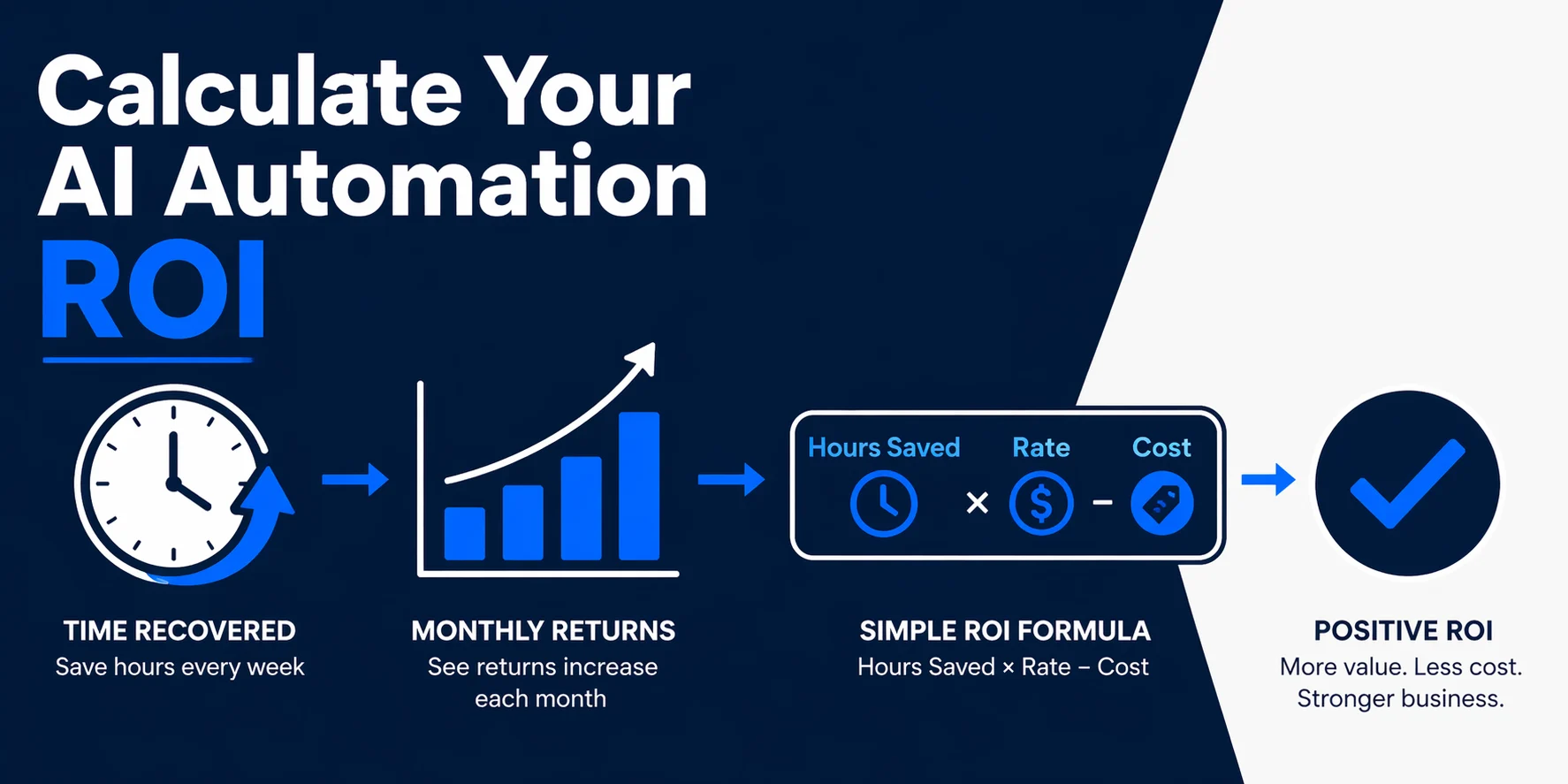
For the math of fixed-fee vs. salaried implementation, the AI automation ROI guide walks through worked examples, and the Automiq AI pricing page lists what each tier includes.
Questions to Ask Before You Hire Either Option
Use the same five questions for every freelancer and agency you talk to. Vague answers will sort the candidates faster than any portfolio review.
- Show me a workflow you have built end to end for a business like mine.
- Who is responsible if this breaks at 2 a.m. on a Saturday?
- What does your handover documentation look like? Can I see an example?
- How will you test against my real data, not synthetic samples?
- What is in your post-launch support window, and how long does it last?
A credible freelancer can answer most of these for a single workflow. A credible agency can answer all of them for a multi-workflow build.
If the candidate hedges on testing or support, treat that as the answer. The cheapest hire is the one that holds up after launch.
Red Flags That Signal the Project Will Fail
Some red flags apply regardless of who you hire:
- The scope is described in marketing language (“we will transform your workflow”) with no list of triggers, actions, or success criteria.
- Pricing is hourly with no fixed deliverable.
- Integration is described as “we connect to your tools” without naming the accounts, fields, or direction of data flow.
- There is no testing phase, or testing happens against synthetic data only.
- The candidate cannot show a comparable workflow they have shipped.
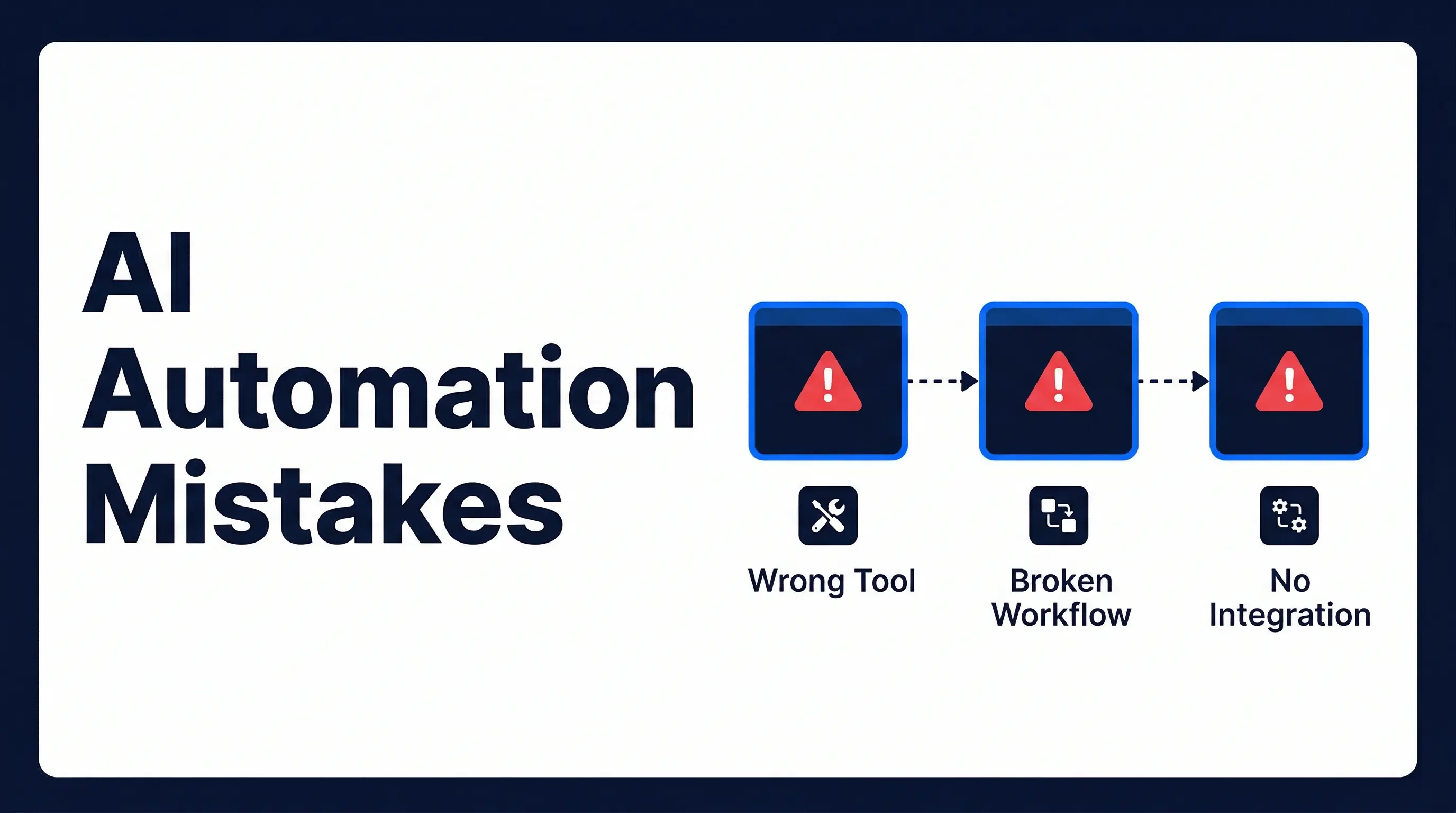
The common AI automation mistakes guide walks through the operational versions of these gaps in more depth.
BCG found that 74% of companies have yet to show any tangible value from their AI investments, and only 5% create substantial value at scale in its 2025 update on AI value generation. The 5% have one thing in common: clear accountability after launch. The 74% mostly do not.
When Automiq AI Is the Better Fit (and When It Isn’t)
Automiq AI is built for a specific buyer profile. It is a fit when:
- Your team is two to twenty-five people.
- You already use a CRM, email, calendar, and phone system.
- You have at least three repeatable workflows draining ten or more hours a week.
- You want a fixed-fee engagement with a clear handover, not an ongoing retainer.
- You want someone responsible for the system after launch.
It is not a fit when:
- You are a solo operator with one narrow task (hire a freelancer; cheaper and faster).
- You have no live tools yet (we cannot integrate with a stack that does not exist).
- You want a strategy deck rather than a working build.
Frequently Asked Questions
Is an AI automation agency vs freelancer worth the price difference?
The price difference is worth it when the project crosses two or more systems, touches customer communication, or has to keep running after launch. For a narrow single-workflow build, a freelancer is usually cheaper and just as good. The decision is structural, not budgetary.
How long should an AI automation agency take to deliver?
A focused agency build for two to five workflows typically lands in one to two weeks from discovery call to live system. Larger engagements with a voice agent or six-plus workflows can run three to four weeks. If the timeline is open-ended, treat that as a red flag.
What questions should I ask before hiring an AI automation agency vs freelancer?
Ask to see a similar workflow they have shipped, ask who owns the system after launch, ask what their handover documentation looks like, ask how they will test against your real data, and ask what is in their post-launch support window. Vague answers will sort the candidates fast.
Can I switch from a freelancer to an agency later?
Yes, and it is common. Many small businesses start with a freelancer for a single workflow, then move to an agency once the workflow set grows beyond what a part-time freelancer can support. The migration is easier when the freelancer leaves clean documentation.
Does Automiq AI compete with freelancers?
No. We tell prospects honestly on the discovery call when a freelancer is the right answer. We are built for multi-system, customer-facing builds where someone needs to be responsible after launch, not for single-workflow handoffs.
Conclusion
Picking between an AI automation agency vs freelancer is not a price decision. It is a structure decision. Single workflow, contained scope, owner ready to operate the result: go with a freelancer. Multi-system, customer-facing, has to keep running after launch: go with an agency.
Whoever you hire, ask the five questions above, and trust the vague answers more than the polished pitch. Eighty percent of AI projects do not deliver business value, and the gap is almost always operationalization.
Book a free discovery call and we will tell you honestly whether a freelancer, a DIY setup, or a full done-for-you build is the right fit.