EN
EN DE
DE ES
ES FR
FR NL
NL PT
PT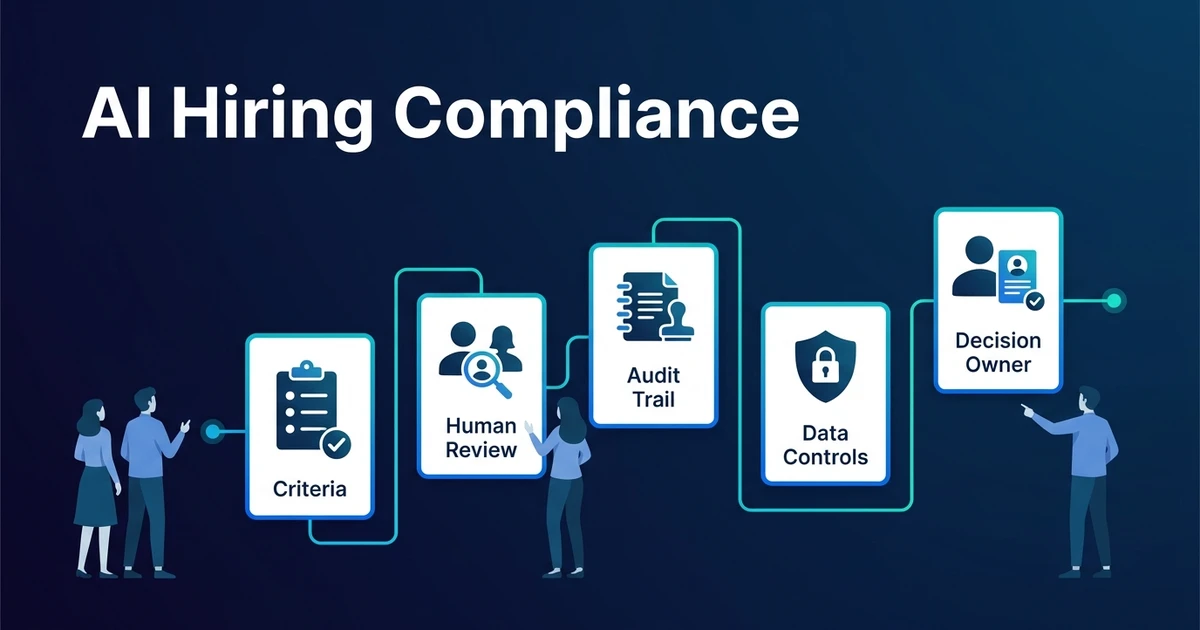
Quick Answer: AI hiring compliance means using recruitment AI with human accountability, consistent criteria, protected candidate data, and a clear audit trail. The safest starting point is to automate administrative work while keeping recruiters responsible for candidate-facing decisions, rejections, offers, accommodations, and exceptions.
Compliance should come before AI hiring automation. That is the less exciting order, but it is the one that keeps your workflow usable when a candidate, client, regulator, or internal leader asks how a decision happened.
This article is practical implementation guidance, not legal advice. The rules that apply to your organization depend on jurisdiction, role type, data use, and how much the AI affects decisions.
Still, the workflow principles are clear: automate admin, keep humans accountable, document the process, and avoid black-box decisions.
Why AI hiring compliance matters before you automate recruitment
Recruiting teams are adopting AI because the admin load is real. LinkedIn reports that 37% of recruiting organizations are actively integrating or experimenting with GenAI in its 2025 Future of Recruiting report.
The same report says 73% of talent acquisition professionals agree AI will change how organizations hire in its 2025 recruiting research. That level of adoption means governance cannot be an afterthought.
AI can help with summaries, reminders, structured notes, draft emails, and data entry. It can also create risk if it quietly changes candidate outcomes or applies criteria no one can explain.
A compliant workflow is not slower by default. It is clearer. Recruiters know where AI helps, where they approve, and what record remains after the action.
What does AI recruitment compliance mean in practice?
AI recruitment compliance means your hiring workflow has controls around how AI uses data, produces outputs, and influences decisions. It is not just a vendor checklist.
In practice, your workflow should define:
- Human oversight for sensitive actions
- Consistent role-related criteria
- Candidate transparency where required
- Data minimization and retention rules
- Audit trails for outputs and overrides
- Access controls for candidate data
- Clear ownership of final decisions
The European Commission explains that AI tools for employment and recruitment, including CV-sorting software, fall into high-risk AI use cases and require measures such as risk mitigation, logging, documentation, and human oversight under its AI Act guidance.
Even if your team is outside the EU, those controls are useful. They make your process more consistent and easier to defend.
Which recruitment AI workflows are lower risk?
Lower-risk workflows usually support admin rather than decide outcomes. They help recruiters move faster while keeping decision authority human.
Good starting points include:
- Summarizing job intake notes
- Flagging missing role information
- Drafting candidate updates for approval
- Creating interview reminders
- Writing CRM or ATS notes after review
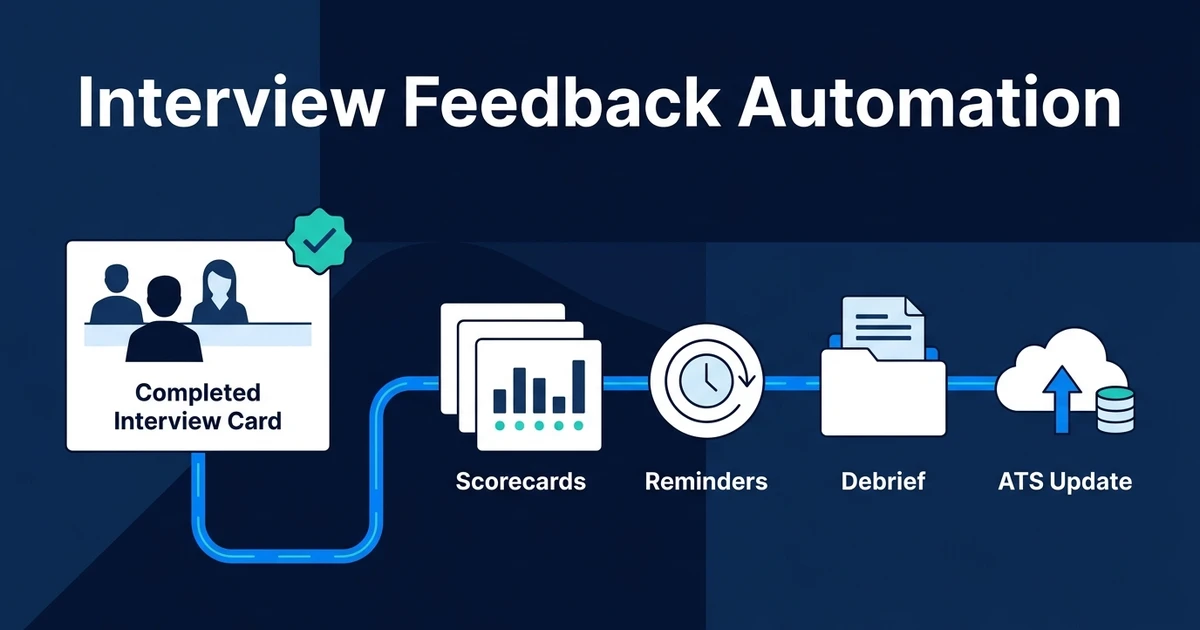
- Preparing feedback summaries for recruiters
- Routing stale tasks to the right owner
Lower risk does not mean no risk. A draft email can still reveal sensitive information. A summary can still omit context. A status update can still land in the wrong record if the workflow is poorly designed.
That is why every automated step needs a clear owner, a data source, and a review rule. If the output can affect a candidate’s opportunity, add a human gate.
Where human in the loop hiring AI should be mandatory
Human in the loop hiring AI should be mandatory anywhere the outcome affects a person, a client relationship, or a compliance-sensitive record. The point is not to slow recruiters down. It is to make sure AI prepares decisions instead of making them.
Keep human approval on:
- Candidate rejection or advancement
- Interview evaluation and scorecard interpretation
- Reasonable accommodation handling
- Salary, offer, and negotiation steps
- Exceptions to standard criteria
- Client-facing candidate summaries
- Sensitive rejection or feedback messages
ADA.gov explains that employers increasingly use hiring technologies for targeted job ads, qualification checks, online video interviews, skills tests, and resume scoring, and that those tools may create unlawful discrimination risks for applicants with disabilities in its hiring technology guidance.
That is the practical reason humans stay in the loop. AI may organize evidence, but a person needs to consider context, accessibility, and exceptions.
How to reduce AI hiring bias with structured workflows
Bias control starts before the model runs. If your hiring process is inconsistent, AI will scale the inconsistency.
Use structured workflows that compare candidates against job-related evidence. Required license present. Years in a role family. Work authorization status where lawful and relevant. Location constraints. Required tools. Clear availability rules.
Avoid subjective signals that are hard to defend. Appearance, accent, facial expression, tone, and vague personality judgments can introduce risk and distract from job performance.
For a practical example, a recruiter reviewing customer support candidates might use role-related criteria such as written response quality, required language coverage, time zone availability, and CRM experience. The workflow should not score facial expression or guess enthusiasm from a video.
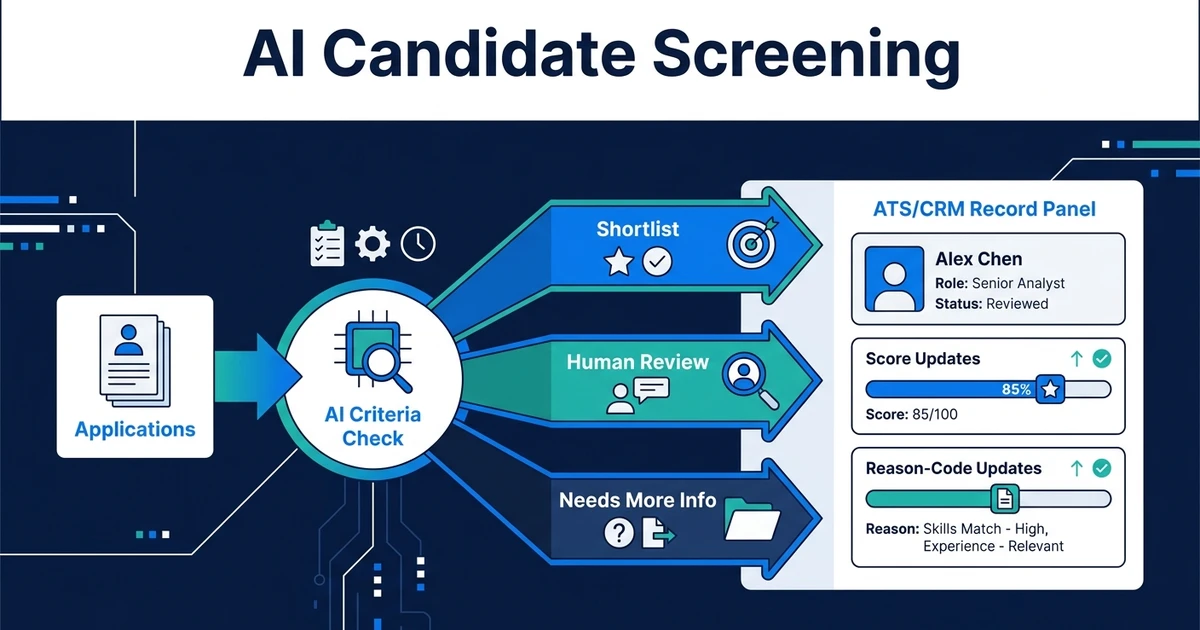
If you already use AI candidate screening, keep the screening criteria narrow, documented, and reviewable. If the criteria changes, record who approved it and why.
What should an AI recruitment audit trail include?
An audit trail is the record that lets your team reconstruct what happened. It should show what data entered the workflow, what AI produced, what a human reviewed, and who made the final decision.
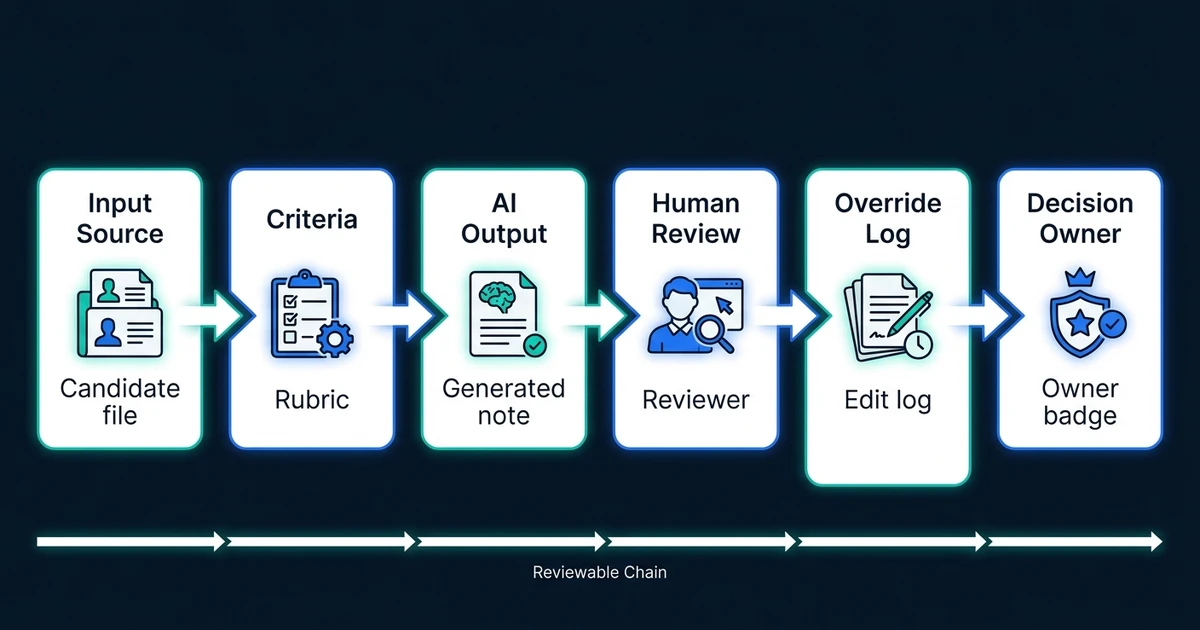
At minimum, keep:
- Candidate or role input source
- Workflow and prompt version
- Role-specific criteria
- AI output or summary
- Recruiter review status
- Edits, overrides, and reasons
- Final decision owner
- Retention and deletion rules
The EEOC’s FY 2024-2028 enforcement plan recognizes employer use of AI and machine learning to target job ads, recruit applicants, and make or assist hiring decisions, and identifies technology-related employment discrimination as a priority in its strategic enforcement plan.
That does not mean every admin workflow needs legal review at every click. It does mean candidate-affecting workflows should leave records your team can inspect.
Automiq AI can review one recruitment workflow and identify where the human approval points and audit-trail fields should sit before automation goes live. Start with a recruitment AI workflow review if your current process depends on scattered email, spreadsheets, and ATS notes.
AI recruitment compliance checklist before launch
Use a launch checklist before you turn on any recruitment AI workflow. The checklist should be boring. Boring is good when the process affects candidates.
Before launch, confirm:
| Control | What to check | Owner |
|---|---|---|
| Workflow map | Trigger, input, output, and system of record are documented | Recruiting operations |
| Role criteria | Criteria are job-related and approved | Recruiter or hiring manager |
| Human approval | Sensitive actions pause for review | Workflow owner |
| Candidate data | Collection and retention are limited | Operations or legal |
| Audit trail | Outputs, edits, and overrides are logged | System owner |
| Access | Only approved users can view candidate data | Admin |
| Escalation | Edge cases have a human path | Team lead |
Run the workflow beside your manual process before you depend on it. Compare outputs, check mistakes, and tune the criteria.
If the workflow saves time but creates unclear decisions, do not expand it. Fix the review point first.
Frequently Asked Questions
What is AI recruitment compliance?
AI recruitment compliance means using hiring AI with clear criteria, human oversight, candidate data controls, and records that explain how outputs were produced and reviewed. It is about workflow design as much as software choice.
Is AI hiring legal?
AI hiring can be legal, but requirements vary by jurisdiction and use case. Treat this article as practical implementation guidance, not legal advice, and review applicable laws before deploying AI in hiring decisions.
Can AI reject candidates automatically?
Some systems can, but automatic rejection creates higher risk. Safer workflows let AI organize evidence and route candidates into review bands while humans approve rejections, advancement, and exceptions.
What is human in the loop hiring AI?
Human in the loop hiring AI means a recruiter, HR leader, or hiring manager reviews AI outputs before sensitive decisions happen. The human can approve, edit, override, or escalate the recommendation.
What should a recruitment AI audit trail include?
An audit trail should include the input data, workflow version, criteria, AI output, recruiter review, overrides, final decision owner, and retention policy. That record makes the process easier to inspect later.
Does the EU AI Act affect recruitment AI?
The EU AI Act treats many employment and recruitment AI uses as high-risk, including tools for CV sorting and candidate evaluation. Teams operating in or hiring into relevant EU contexts should review obligations with counsel.
Conclusion: Build compliance into the workflow, not after it
Recruitment AI controls work best when they are built into the workflow before launch. Add human approval where the decision matters. Use consistent criteria. Keep candidate data limited. Preserve a clear record.
That structure does not block automation. It makes automation easier to trust.
Automiq AI builds recruitment automation with review points, documentation, and existing-tool integration from the start. If you want to automate hiring admin without creating a black-box process, book a recruitment AI workflow review and start with one workflow your team can inspect.