EN
EN DE
DE ES
ES FR
FR NL
NL PT
PT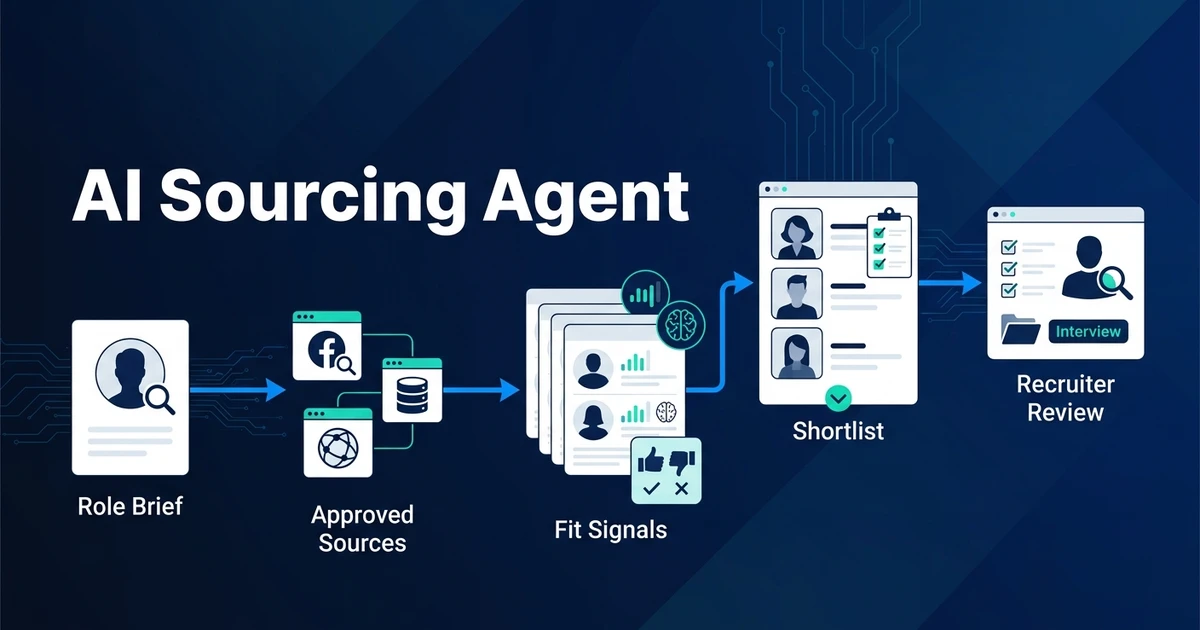
Quick Answer: An AI sourcing agent helps recruiters build a passive candidate pipeline before outreach begins. It turns role criteria into search logic, gathers candidate context, flags fit signals, and prepares a recruiter-reviewed shortlist so your team spends less time searching and more time speaking with qualified people.
Manual sourcing looks productive until you count the handoffs. A recruiter reads a job brief, searches multiple places, opens profile after profile, copies names into a spreadsheet, checks old notes, and then starts drafting outreach.
That work matters, but too much of it is mechanical. LinkedIn reports that recruiting teams experimenting with or integrating GenAI save about 20% of their work week on average in its 2025 Future of Recruiting report. Sourcing is one of the clearest places to reclaim that time.
The sourcing workflow should not replace recruiter judgment. It should prepare the pipeline so your recruiters review better candidates faster.
Why manual candidate sourcing slows recruitment teams down
Manual sourcing slows teams because every search starts from scratch. Even when recruiters know the market, they still repeat the same steps: translate role requirements, run searches, compare profiles, remove duplicates, check notes, and prepare outreach.
The real cost is not just time. It is focus. When your best recruiter spends two hours refining search strings, they are not advising a client, qualifying a motivated candidate, or closing a shortlist.
The problem gets worse across multiple active roles. A staffing team with 6 open requisitions may run 6 separate sourcing processes, each with its own spreadsheet, saved search, and follow-up list.
An AI-assisted sourcing workflow brings those steps into a repeatable process. The recruiter still sets direction, but the system handles the heavy organizing work.
What is an AI sourcing agent?
This type of workflow assistant helps find, organize, and prioritize potential candidates before outreach begins. It starts with role criteria, then prepares a recruiter-reviewed view of who may fit and why.
In practice, it can translate a role brief into must-have and nice-to-have criteria, search approved sources, extract relevant profile details, identify duplicates, and prepare a shortlist with fit notes.
It is not a hiring decision tool. It should not make final calls about who is qualified, who gets rejected, or who receives a sensitive message.
The useful output is a cleaner starting point: fewer irrelevant profiles, clearer reasons for fit, and faster movement from role intake to recruiter review.
How an AI candidate sourcing workflow should run
Start with role intake. The agent needs a structured brief with title, seniority, location, salary or rate range, required skills, industry context, and any hard exclusions.
Then define the approved sources. Those may include job boards, public profiles, internal spreadsheets, recruitment CRM notes, or candidate databases your team has permission to use. The workflow should not invent sources or pull data from places your agency has not approved.
A strong workflow follows these steps:
- Capture the role requirements in a structured intake
- Convert requirements into search and fit criteria
- Pull candidate context from approved sources
- Remove duplicates and incomplete records
- Flag fit signals, gaps, and missing information
- Send a shortlist to the recruiter for review
- Update the ATS or CRM only after approval
The recruiter should see why each candidate appears on the list. “Looks good” is not enough. The output should show role match, source, evidence, and any uncertainty.
If you want this mapped against your real tools, Automiq AI can design the sourcing workflow from job intake to recruiter-approved shortlist. Start with a recruitment automation discovery call and bring one role your team sources manually today.
What data does an AI candidate sourcing workflow need?
The quality of the shortlist depends on the quality of the input. If the role brief is vague, the agent will produce vague matches.
At minimum, your workflow needs:
- Job title and role family
- Required skills, tools, certifications, or licenses
- Location, remote rules, and time zone limits
- Salary, rate, or compensation band
- Seniority level and years of relevant experience
- Industry, client context, and must-avoid backgrounds
- Approved sources and contact permission rules
You also need a clear scoring rubric. A recruiter should be able to tell why a candidate ranked high, why another fell into review, and which gaps need human judgment.
That rubric does not need to be complex. For many agencies, three bands work well: strong fit, review fit, and weak fit. The agent prepares the bands, but the recruiter decides what happens next.
Where recruiter review should happen before outreach
Recruiter review should happen before any candidate-facing action. The agent can prepare the shortlist and draft outreach, but a human should check fit, source quality, contact permission, and tone.
This matters because sourcing is relationship work. A candidate who is technically relevant may be a poor outreach target because of prior interactions, client conflicts, salary mismatch, or timing.
Use review gates at four points:
- Before a candidate enters the approved shortlist
- Before the first message sends
- Before any profile goes to a client
- Before criteria changes affect the next sourcing run
The EEOC’s FY 2024-2028 enforcement plan recognizes employer use of AI and machine learning to target job ads, recruit applicants, and make or assist hiring decisions in its recruitment and hiring priorities. Recruiter review helps keep your sourcing process explainable and accountable.
AI sourcing workflow vs candidate rediscovery automation
External sourcing and recruitment workflow automation solve related problems, but they should not target the same page or workflow.
External sourcing focuses on passive market discovery. It helps you find potential candidates who may not already be active in your current role pipeline.
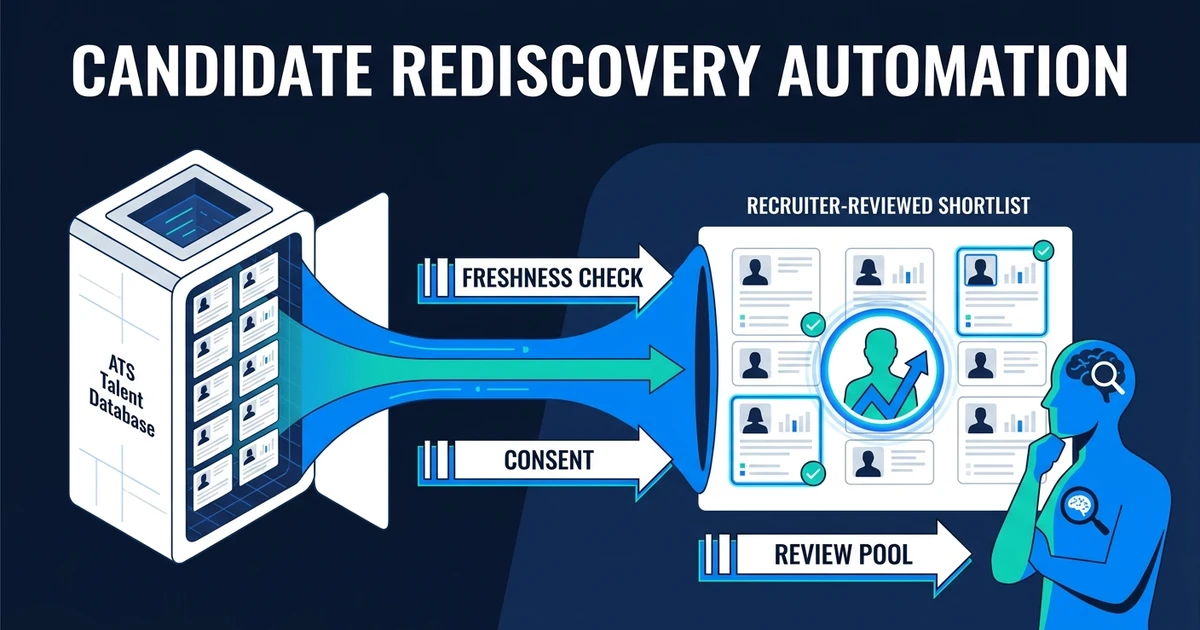
Candidate rediscovery focuses on people already in your ATS or recruiting CRM. It looks for silver medalists, past applicants, and existing contacts who match a new role.
Most agencies eventually need both. Sourcing expands the market. Rediscovery makes better use of the talent you already paid to attract.
How to evaluate an AI candidate sourcing setup for your recruitment agency
Evaluate a sourcing setup by fit, control, and integration. A tool that finds profiles but leaves your team copying data into spreadsheets has only solved half the problem.
Use this comparison before you choose a path:
| Option | Best fit | Watch-out |
|---|---|---|
| Native sourcing tool | Teams that want a dedicated sourcing product | May add another login and disconnected workflow |
| DIY automation | Technical teams with time to build and maintain logic | Setup and fixes fall on your team |
| Done-for-you implementation | Agencies that want sourcing connected to current ATS, CRM, and email | Requires clear workflow goals before build |
DIY can work for a simple source-to-spreadsheet process. If your workflow needs source rules, deduplication, recruiter approval, outreach handoff, and CRM write-back, the build becomes operational, not just technical.
That is where AI integration matters. The sourcing layer should connect to the systems your recruiters already trust, then send approved next steps into AI automation for recruitment agencies or the ATS.
Frequently Asked Questions
What is an AI candidate sourcing agent?
An AI candidate sourcing workflow helps find and organize potential candidates before outreach begins. It turns role criteria into search logic, prepares candidate context, and gives recruiters a shortlist to review.
Can an AI candidate sourcing workflow search LinkedIn for me?
It depends on the data sources and permissions in your workflow. A responsible setup should only use approved sources, follow platform terms, and keep recruiters in control before any outreach.
Is AI candidate sourcing compliant?
AI candidate sourcing can be compliant when it uses job-related criteria, approved data sources, human review, and clear records. You should review legal and platform requirements before using AI to source or contact candidates.
Does an AI candidate sourcing workflow send outreach automatically?
It can, but the safer pattern is recruiter-approved outreach. The agent can draft messages and prepare the handoff, while the recruiter checks fit, permissions, and tone before anything goes out.
What is the difference between sourcing and screening?
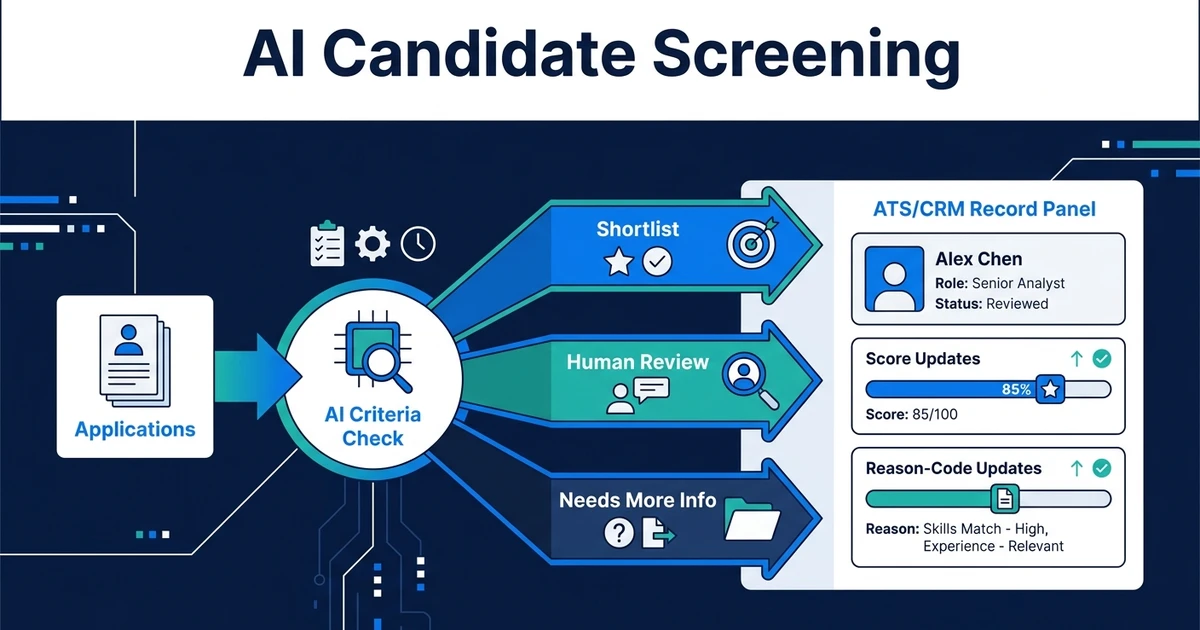
Sourcing finds potential candidates before or outside an application flow. Screening reviews candidates against role criteria after profiles or applications are available.
Conclusion: Source faster, but keep recruiters in control
An AI-assisted sourcing workflow should reduce search admin, not remove recruiter judgment. The goal is a cleaner passive pipeline, faster shortlist review, and fewer manual handoffs before outreach.
The best setup starts with one role family, approved sources, clear criteria, and recruiter review before candidate contact.
Automiq AI builds sourcing workflows inside your existing recruitment stack, from intake to shortlist to approved outreach handoff. If your team is ready to stop rebuilding sourcing spreadsheets every week, book a recruitment automation discovery call and map the first workflow.