EN
EN DE
DE ES
ES FR
FR NL
NL PT
PT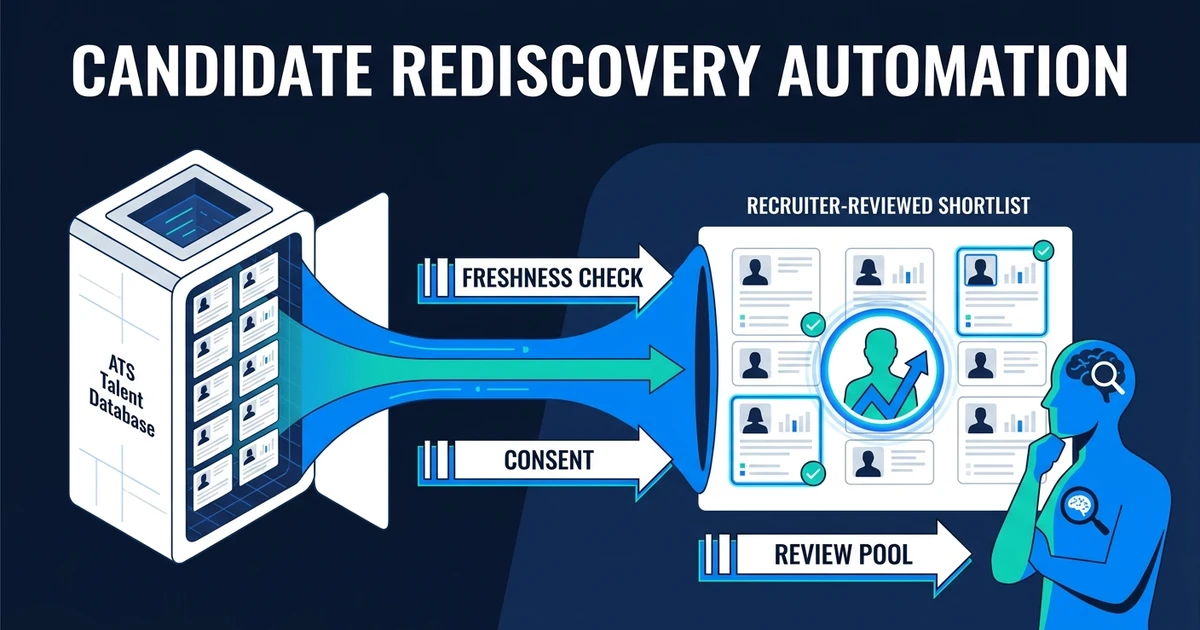
Quick Answer: Candidate rediscovery automation searches past applicants and known prospects when a new role opens, checks whether their data is usable, and presents relevant people for recruiter review before any outreach. It reduces repeated cold sourcing while keeping consent, data freshness, role fit, and re-engagement decisions under human control.
Candidate rediscovery automation turns your existing ATS into a practical sourcing channel. Instead of starting every search from zero, recruiters can review past applicants, silver medalists, alumni, and previous prospects who may fit a new role.
The key word is review. Rediscovery should surface possibilities, not contact people automatically or decide who belongs in the process.
Why Strong Past Candidates Disappear Inside the ATS
Past candidates disappear for ordinary reasons. Records use inconsistent tags, resumes go stale, notes live in old applications, and recruiters search by exact keywords that miss related skills.
There is also an ownership problem. A candidate who was excellent for a previous role may sit under a closed requisition with no reminder, no updated profile, and no clear next step when a similar opening appears.
LinkedIn says starting candidate searches from scratch can add days or weeks and recommends re-engaging skilled candidates from previous requisitions, according to its 2025 time-to-fill guidance. Rediscovery addresses that specific waste: known talent being ignored because the database is hard to use.
That does not mean every database hides a perfect hire. It means historical relationships deserve a controlled search before your team pays for another sourcing push.
What Is Candidate Rediscovery Automation?
Candidate rediscovery automation searches historical candidate records against a new approved role, checks whether each record can still be used, and creates a recruiter-reviewed shortlist for potential re-engagement.
It is not the same as screening. Screening evaluates active applicants in a current process. Rediscovery finds previous candidates who may be worth contacting before they become active applicants again.
It is also different from general CRM nurture. Nurture keeps relationships warm over time. Rediscovery begins when a new role opens and asks, “Who already in our system might be relevant?”
The best fit is a team with recurring role types, meaningful application history, or strong silver-medalist pools that rarely get searched consistently.
How Does an Automated Candidate Rediscovery Workflow Work?
A responsible rediscovery workflow follows a controlled sequence:
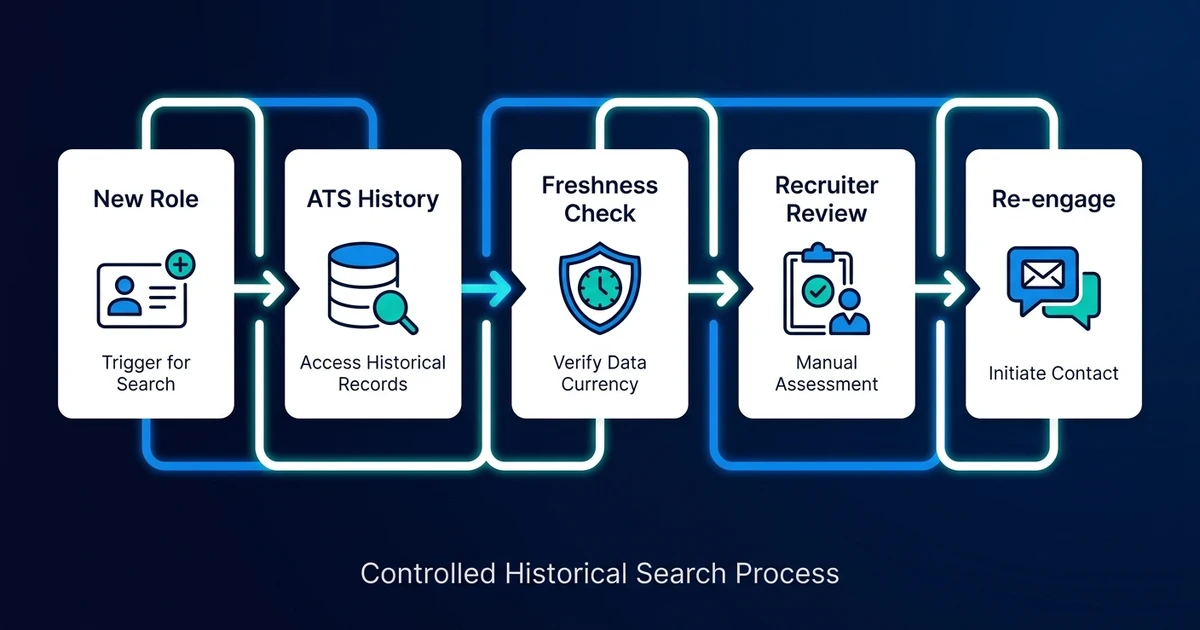
- A new role is approved and its core criteria are normalized.
- The workflow searches eligible historical records using approved fields and semantic retrieval.
- Data freshness, retention status, communication preferences, and exclusion rules are checked.
- Possible matches are grouped with source evidence and confidence notes.
- Recruiters approve, reject, or request profile updates before outreach.
- Approved re-engagement messages are sent or drafted.
- Activity and recruiter decisions are logged in the ATS or CRM.
The workflow should show why each person surfaced. A recruiter needs to see the past role, skills, notes, last contact, and any restriction before deciding whether to re-engage.
No candidate should be moved into a live process or contacted without the controls your policy requires. Rediscovery is a sourcing assist, not an automated decision.
Which Past Candidates Should Be Eligible for Rediscovery?
Strong candidates usually come from a few pools: silver medalists, withdrawn candidates, previous prospects, alumni, and people rejected for role-specific reasons rather than universal concerns.
Eligibility rules matter. A candidate who lacked one skill for a senior role may be a good fit for a related opening. A candidate marked do-not-contact, deleted, or unresolved for data-quality reasons should not appear in the outreach queue.
The workflow should exclude records with expired permissions, unresolved duplicates, missing contact basis, or sensitive restrictions. It should also avoid presenting people whose last known preferences clearly conflict with the new role.
The point is not to make the largest possible list. It is to create a clean review set that recruiters trust enough to use.
How Should Rediscovery Handle Stale Data, Consent, and Retention?
Historical data needs guardrails. A resume from an old application may contain outdated salary expectations, location preferences, work authorization details, or contact information.
Rediscovery should check:
- Last contact date and last profile update
- Communication preferences and opt-out status
- Retention or deletion rules
- Consent basis for re-engagement
- Duplicates and merged identities
- Missing or conflicting profile fields
Legal requirements vary by location and role, so the organization defines the policy. Automation enforces the policy and sends uncertain records to a human owner.
LinkedIn reported that skills-first hiring can expand talent pools by up to 10 times, and 73% of recruitment professionals said skills-based hiring was a priority, according to its 2024 Future of Recruitment research. Skills-based rediscovery can help find people exact keywords miss, but only if the underlying data is allowed, current, and reviewable.
If your agency wants ATS search, data checks, recruiter approval, and re-engagement connected inside current systems, Automiq AI can build a done-for-you ATS rediscovery workflow that keeps consent and review rules visible.
Where Does Rediscovery End and Candidate Screening Begin?
Rediscovery ends when a recruiter has a reviewed pool of people who may be worth contacting. Screening begins when a person enters or re-enters an active application process and is evaluated against approved role criteria.
Keep this boundary clear:
- Rediscovery asks who in the historical database may be relevant.
- Outreach asks whether that person is interested and eligible to discuss the role.
- Screening asks whether the active candidate meets the role criteria.
- Hiring decisions remain with the approved human process.
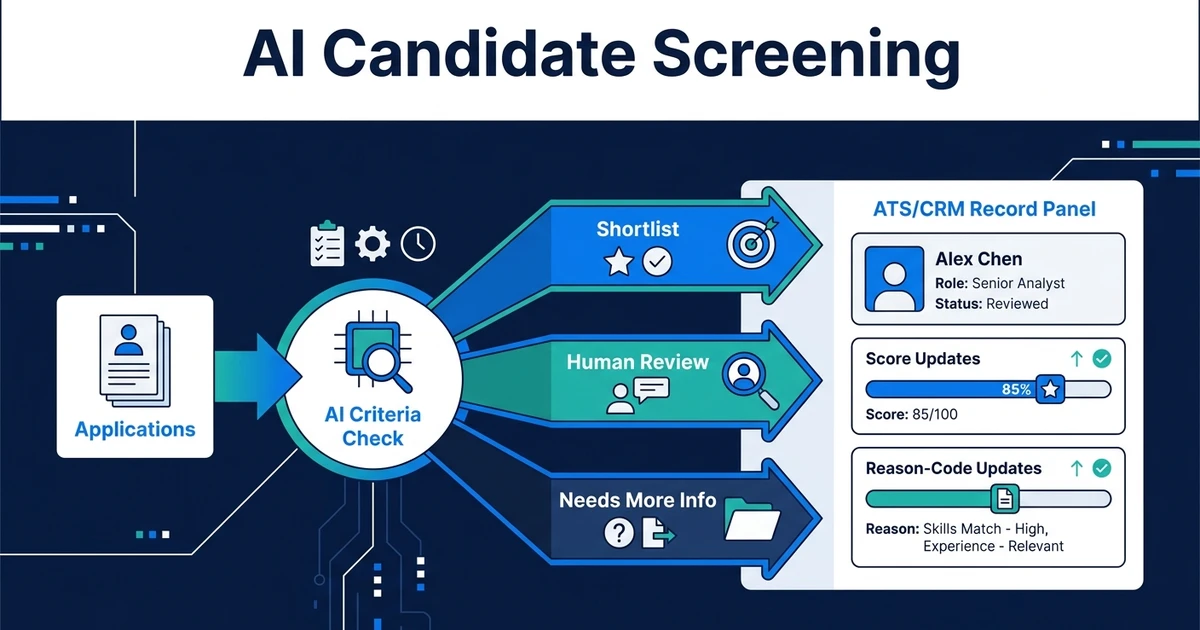
Our guide to AI candidate screening for active applicants covers evaluation, ranking support, and shortlist review. Rediscovery should not reject or advance active applicants.
The workflow can provide evidence. It should not become an opaque selection engine hidden inside sourcing.
What Does Candidate Rediscovery Look Like for a Recurring Role?
Picture an agency that regularly fills finance manager roles for similar clients. Each search starts with job boards and outbound sourcing, even though the ATS contains previous finalists, declined candidates, and strong prospects.
With rediscovery, the approved role triggers a historical search. The workflow finds people with related skills, checks their last contact and consent status, highlights old interview notes, and flags stale records for update.
The recruiter reviews the pool before outreach. Some candidates are excluded because preferences changed. Others receive a specific re-engagement message based on the current role, not a generic blast.
The outcome is a more disciplined first sourcing pass. The agency uses relationships it already earned before spending time building a new list.
Done-for-You vs DIY ATS Search vs Manual Database Mining
The right path depends on database quality and how much control your team needs.
| Approach | Best fit | Main tradeoff |
|---|---|---|
| Manual database mining | Small, clean databases and low urgency | Search quality depends on recruiter memory |
| DIY ATS saved searches | Clear fields and repeatable role types | Consent checks and outreach logic remain manual |
| Done-for-you rediscovery workflow | Large databases, stale records, and several systems | Requires agreed eligibility, freshness, and review rules |
Manual search is still useful when the database is small and recruiters know the talent pool well. It becomes unreliable when records span years, teams, and role types.
DIY saved searches can work when the ATS data is consistently tagged. They struggle when useful evidence sits in resumes, notes, emails, or older applications.
A done-for-you workflow fits when rediscovery needs semantic retrieval, exclusion rules, recruiter approval, re-engagement messages, and write-back to work together.
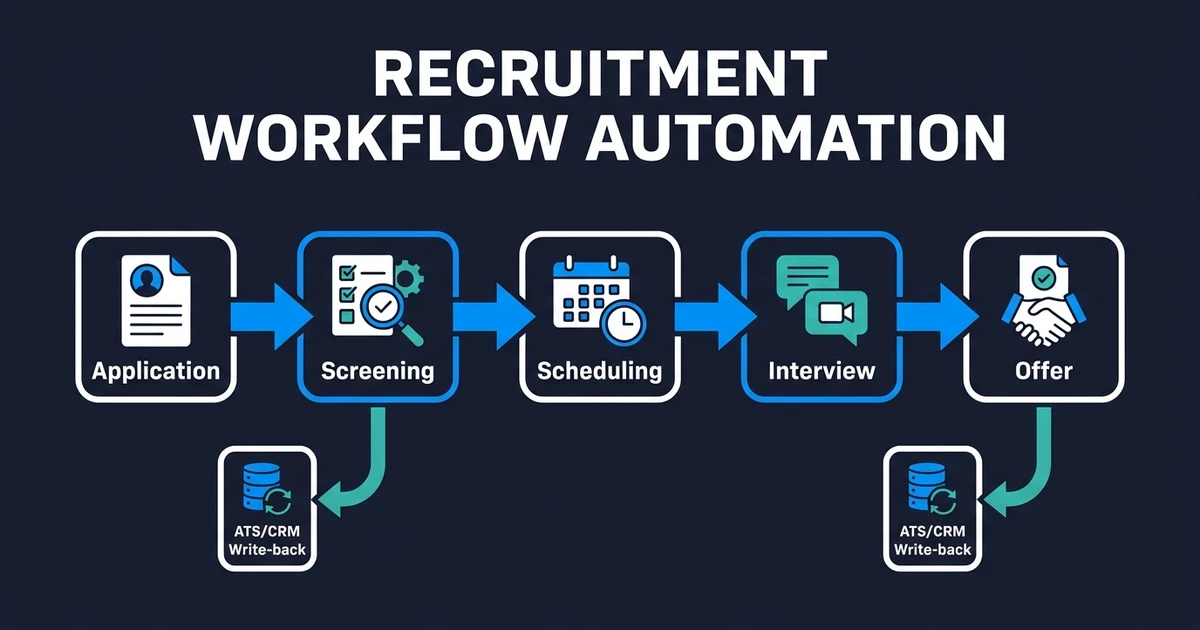
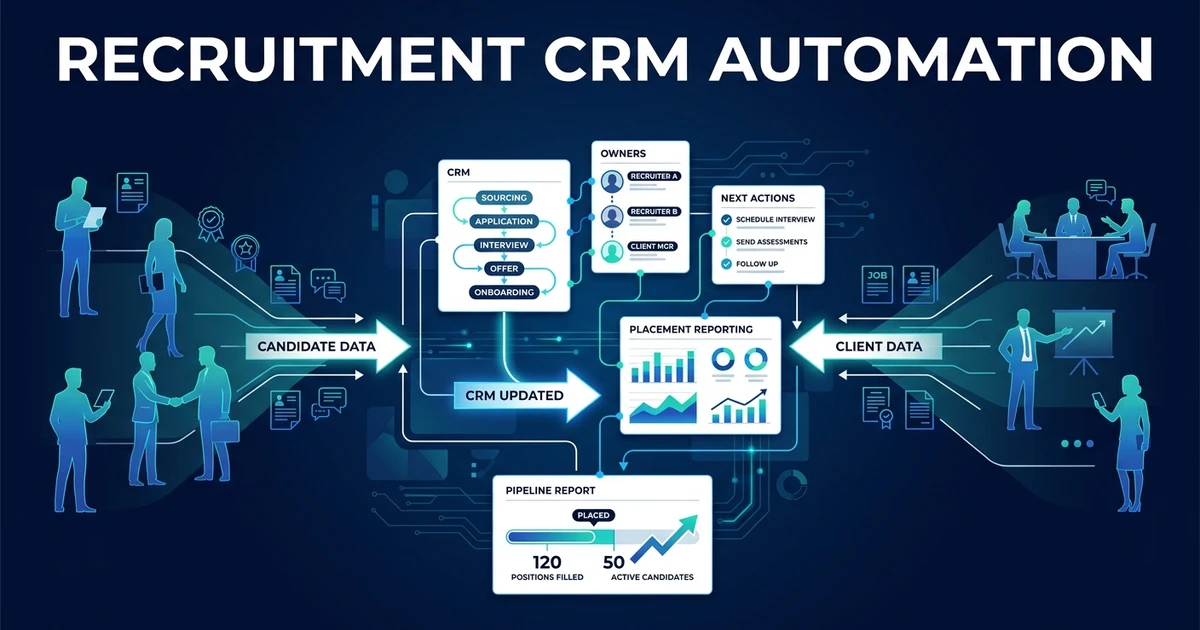
For the broader vertical business case, see how rediscovery fits agency-wide recruitment automation opportunities.
How Do You Evaluate Candidate Rediscovery Automation?
Measure quality and control, not just match volume. Useful checks include eligible pool size, result relevance, stale-record rate, recruiter approval rate, response rate, rediscovered candidates progressing, duplicate-contact rate, and deletion compliance.
Review a sample before launch. Ask whether the workflow surfaced candidates a recruiter would realistically contact and whether the exclusion rules kept restricted records out.
LinkedIn reported that 73% of talent acquisition professionals agreed AI will change how organizations hire, while its Future of Recruiting report recommends AI as an aid to human judgment rather than a replacement, according to the 2025 report. Rediscovery should follow that model.
If recruiters reject most suggestions, fix the criteria, data mapping, or freshness rules. Do not solve low relevance by sending more names.
Frequently Asked Questions
What is candidate rediscovery automation?
It searches historical candidate records when a new role opens, checks whether the data can be used, and presents relevant people for recruiter review. It helps teams reuse existing relationships before starting from zero.
Is candidate rediscovery the same as candidate matching?
No. Rediscovery focuses on past candidates and known prospects for a new role. Candidate matching can include broader active-applicant comparison and should stay separate from historical re-engagement.
Can an ATS rediscover silver medalists automatically?
Yes, if the ATS stores the right history and the workflow can identify strong previous candidates. Recruiter review is still important before outreach or stage movement.
How old can candidate data be before reuse?
That depends on retention policy, consent, communication preferences, and local rules. The workflow should flag stale records and route them for update or exclusion.
Should rediscovery contact candidates without recruiter review?
In most recruitment teams, no. A recruiter should check fit, consent, and relationship context before a message goes out.
Turn Past Candidate Relationships Into a Repeatable Sourcing Channel
Your ATS should not be a graveyard for good conversations. Past candidates can become a useful sourcing channel when the workflow respects freshness, consent, and recruiter judgment.
Start with one recurring role type, one clear eligibility policy, and one review queue. Then expand only when the suggested candidates are relevant and the excluded records stay excluded.
Compare fixed-fee automation packages for a workflow that turns your historical database into a controlled sourcing channel. Automiq AI can connect ATS search, approval, outreach, and activity logging without turning rediscovery into automated screening.