EN
EN DE
DE ES
ES FR
FR NL
NL PT
PT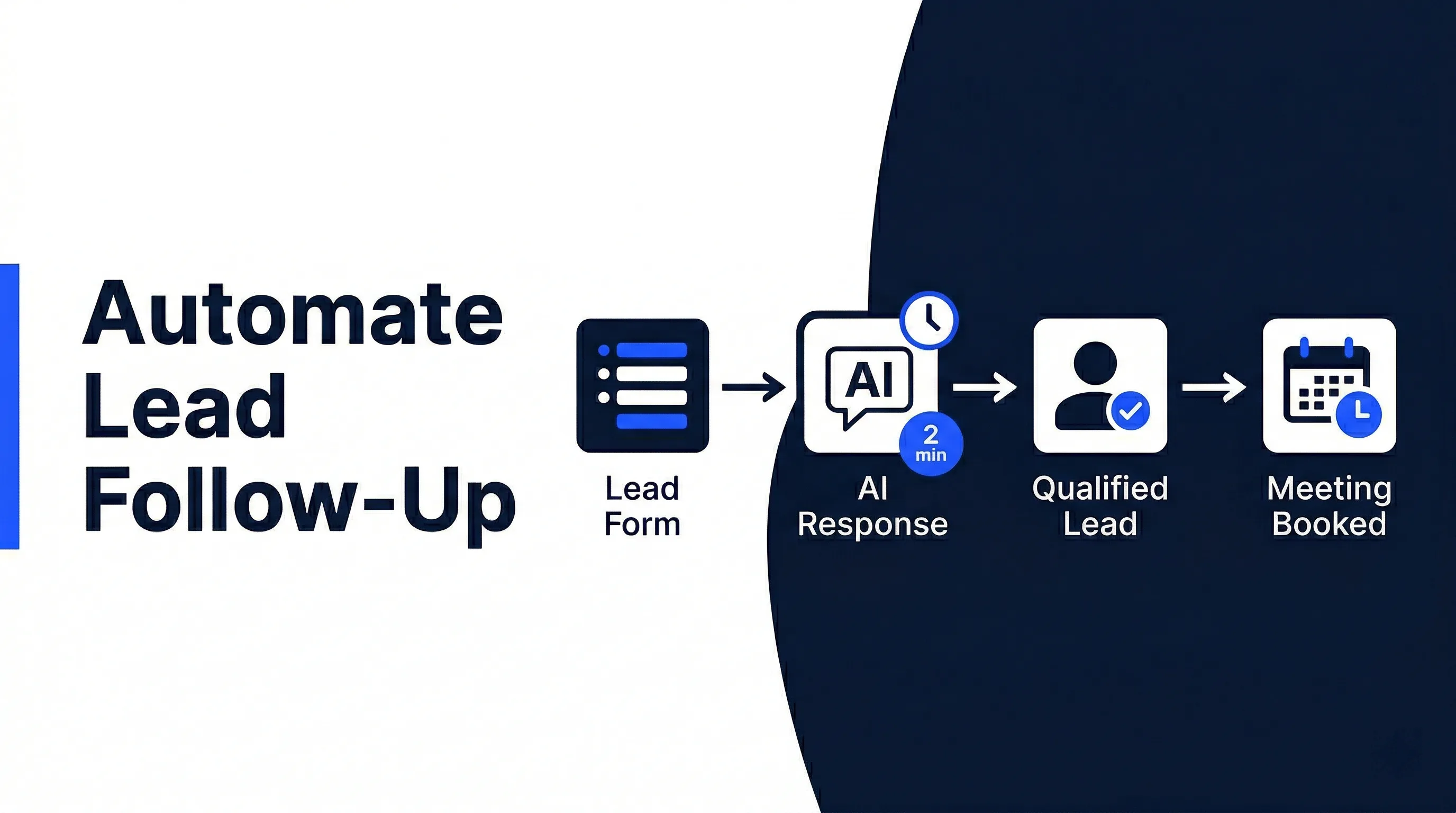
Quick Answer: AI lead follow up automation connects your inbound channels to a workflow that responds to new enquiries instantly, qualifies leads based on your criteria, and logs everything in your CRM without anyone on your team touching it manually. Businesses that deploy this typically recover 5–15 hours per week in manual outreach and see response times drop from hours to minutes.
Most businesses lose leads not because their service is bad, but because they’re too slow. A potential client submits a contact form at 7pm and gets a reply the next morning, if they get one at all. By then, they’ve already spoken to someone else.
This isn’t a motivation problem. It’s a systems problem. And AI lead follow up automation is the fix that runs while you sleep.
Why Leads Go Cold Before You Even Get a Chance
Speed of response is the most underrated variable in sales. The window between a lead reaching out and a competitor picking up the phone is measured in minutes, not hours.
Research from Harvard Business Review found that companies responding to inbound leads within the first hour are seven times more likely to qualify those leads compared to businesses that wait longer. Most small businesses are not responding within an hour. Many aren’t responding within a day.
The problem compounds after hours. Your team is on calls, running projects, or simply not working past 6pm. Leads that come in at 9pm sit in an inbox until someone checks it the next morning. By the time your reply goes out, the prospect has already made a decision. It wasn’t you.
The gap is not about effort. Your team works hard. The issue is that manual follow-up has a fundamental ceiling: it only runs when a person is available.
The 5-Minute Response Rule: What the Research Shows
The 5-minute threshold is not a marketing claim. A study by InsideSales (now XANT) in partnership with MIT tracked response times across hundreds of thousands of inbound leads. The finding: contacting a lead within 5 minutes versus 30 minutes makes you 100 times more likely to reach them. The same study found that 78% of buyers go with the vendor that responds first.
Not the best vendor. Not the cheapest. The first.
The reason is straightforward: when someone reaches out about a service, they’re at peak intent. Every minute that passes, that intent cools. They close the tab, get on with their day, or speak to a competitor. Your follow-up email arriving four hours later is an interruption, not a conversation.
You don’t have to be personally available 24/7 to win this window. You need a system that is.
What AI Lead Follow-Up Actually Looks Like
Here’s a concrete example. A recruitment agency has a contact form on their website. At 9pm on a Thursday, a hiring manager fills it out asking about executive search services.
Without automation, the enquiry sits in an inbox until 9am Friday. Total response time: 12 hours.
With AI lead follow-up automation, here’s what happens:
- The form submission triggers the workflow instantly
- An AI-drafted reply goes out within 2 minutes, acknowledging the enquiry and asking two qualifying questions
- The hiring manager’s details are automatically created as a new record in the CRM with the correct pipeline stage
- A follow-up task is assigned to the relevant account manager for the next morning
- If the hiring manager replies overnight, their response is routed and flagged for human review
Total response time: 2 minutes. Your team did nothing.
The tools involved (n8n, Make, OpenAI) are invisible to the prospect. All they see is a fast, professional response that signals your firm is on it.
Automiq AI builds AI lead follow-up systems that respond within minutes, inside the CRM, email, and calendar tools you already use. See what’s included in each package.
Building It Yourself vs. Getting It Done for You
If you’ve come across Zapier or Make, you might be wondering whether you can build this yourself. The honest answer: yes, technically. The full picture is more complicated.
DIY path:
- Requires learning the automation platform (typically 10–30 hours to build real proficiency)
- Requires mapping your own lead qualification logic and writing the workflow from scratch
- Requires connecting and testing each integration: form, email, CRM, and calendar
- Requires ongoing maintenance when a connected tool updates its API or a step breaks
- Realistic time to a working system: 4–10 weeks for a non-technical business owner
Done-for-you path:
- A specialist maps your process and builds the workflow to your exact requirements
- System is tested, connected, and live in 1–2 weeks
- You hand over a brief and receive a working automation
- Post-launch support covers fixes within the agreed period
The deciding question is simple: do you have 40+ hours to learn, build, and debug an automation system, or would that time be better spent on client work? For high-lead-volume businesses like real estate agencies or recruitment firms, every week without automated follow-up is a week of leads slipping away.
What to Expect After You Automate Lead Follow-Up
The results vary by lead volume and current process, but the pattern is consistent:
- Response time drops from hours or days to minutes, regardless of when leads come in
- CRM accuracy improves because records are created automatically, not manually after the fact
- Missed leads drop sharply because the system works evenings, weekends, and public holidays
- Team time shifts from chasing and admin to genuine client work and relationship building
- Conversion rate improves because speed-to-response is one of the strongest predictors of whether a prospect moves forward
For a business receiving 20 inbound leads per week, recovering even 30% more of those leads through faster response translates directly to revenue, without adding headcount or working longer hours.
If you’re already exploring what else AI can handle beyond follow-up, see how AI automation covers the full small business workflow, covering everything from document processing to CRM updates.
Frequently Asked Questions
What is AI lead follow-up automation?
AI lead follow-up automation connects your inbound channels to a workflow that responds instantly, qualifies the lead based on your criteria, and logs everything in your CRM without manual input. It removes the gap between a lead arriving and your team acting on it.
How fast does AI lead follow-up respond to new enquiries?
AI follow-up systems respond within seconds of receiving an enquiry, around the clock. This is a significant improvement over the average small business response time of 24+ hours, which is when most prospects have already moved on to a competitor.
Does AI lead follow-up automation work with my existing CRM?
Yes. Most AI follow-up systems connect to the CRM you already use, such as HubSpot, Pipedrive, or a spreadsheet-based setup. No migration or new platform is required. The automation runs inside your existing tools.
What happens if a lead replies with something the system cannot handle?
Well-built workflows include escalation rules. If a reply contains something outside the system’s logic, it flags the conversation and notifies a human. The AI handles the volume; your team handles the exceptions that need judgment.
How long does it take to set up AI lead follow-up automation?
A done-for-you setup typically takes 1–2 weeks from discovery call to a live system. DIY builds using platforms like Zapier or Make can take several weeks of iteration for someone without technical automation experience.
How many hours per week does lead follow-up automation typically save?
For businesses receiving 10–50 leads per week, automating follow-up typically saves 5–15 hours per week in manual outreach, CRM updates, and status tracking. The exact figure depends on your lead volume and how many touchpoints your current process requires.
Stop Losing Leads to Slow Response
Every hour a lead sits in your queue without a reply, a competitor gains ground. AI lead follow-up automation closes that gap permanently. Not by working harder, but by making your inbound process run on its own.
Book a free discovery call with Automiq AI and get a custom blueprint for automating lead follow-up inside your existing tools, built and live in 1–2 weeks.