Quick Answer: Integrating an insurance policy administration system with a CRM requires field-level source ownership, durable identity mapping, versioned event schemas, idempotent processing, scheduled reconciliation, and an operating model after launch. For a growing insurer, MGA, broker, or agency, sync the policy facts needed for relationship and service work—not every available field—and route uncertain matches, conflicts, and high-impact actions to authorized staff.
A CRM and a policy administration system describe the same customer from different operational viewpoints. The CRM follows enquiries, relationships, calls, tasks, and campaigns. The policy system controls quotes, issued policies, coverages, endorsements, billing, renewals, cancellations, and other policy lifecycle facts.
Simply copying data both ways creates two incomplete sources of truth. A reliable integration defines exactly what each system owns, how records are linked, which events move, and how differences are detected.
This guide is for insurance organizations whose growth has exposed the limit of native connectors and manual service work: policy data in one platform, relationship activity in another, document and communication steps around both, and no internal engineering team with the capacity to design and operate the integration. The buyer is not shopping for a one-off Zap. They are evaluating whether a senior software and AI partner can take responsibility for a bounded production system, then document and hand it over cleanly.
This guide focuses on that integration layer. For broader agency and carrier workflow examples, see AI automation for insurance agencies.
Start With Business Objects, Not Screens
List the objects the workflow needs before mapping fields:
- Person, organization, household, or account
- Prospect, insured, claimant, producer, and service contact roles
- Quote, submission, policy, term, coverage, endorsement, and cancellation
- Claim reference and status summary when in scope
- Activity, consent, communication preference, task, and campaign membership
- Producer, agency, branch, service team, and owner
The same person may have several roles and several policies. A CRM contact cannot safely stand in for the entire policy model, and a policy number should not be used as a permanent customer identity.
Decide Whether a Native Connector Is Enough
Use the platform’s supported connector when it covers the required objects, directions, frequency, permissions, error handling, and service workflow. Standard capability is usually easier to operate than custom code.
A custom integration layer becomes justified when:
- Policy, party, producer, and account relationships cannot be represented correctly in the CRM connector.
- Several policy, document, billing, claims, or communication systems must participate in one workflow.
- The business needs event-driven service or renewal actions rather than periodic bulk copies.
- Native synchronization creates duplicate identities or unowned field conflicts.
- Sensitive fields require finer access, minimization, or audit controls.
- Failed operations must be reconciled and replayed instead of silently retried.
- The integration supports a differentiated servicing model the organization intends to own.
Start with one commercial outcome—such as issued-policy visibility and renewal task creation for one product line—not a mandate to synchronize the enterprise. A bounded first milestone should state the source systems, data rights, users, event volume, exceptions, security review, acceptance, launch, and operational owner.
Define Source Ownership Field by Field
Use a matrix that says which system may create and change each value.
| Data | Likely owner | CRM use |
|---|---|---|
| Lead source and sales activity | CRM | Primary operational record |
| Marketing consent and preference | Designated consent system or CRM | Segmentation and suppression |
| Legal party identity | Master-data or policy process, depending on architecture | Relationship matching |
| Quote and policy status | Policy administration system | Service context and triggers |
| Coverage, limits, deductibles, and forms | Policy administration system | Restricted summary only when needed |
| Policy effective and expiry dates | Policy administration system | Renewal and service workflow |
| Relationship owner | CRM or governed assignment service | Tasks and communications |
| Billing and payment status | Billing or policy system | Limited service signal if permitted |
Avoid unrestricted two-way synchronization. If both systems can change an address, for example, define whether the CRM creates a requested change that the policy process validates, or whether one system publishes the final approved address to the other.
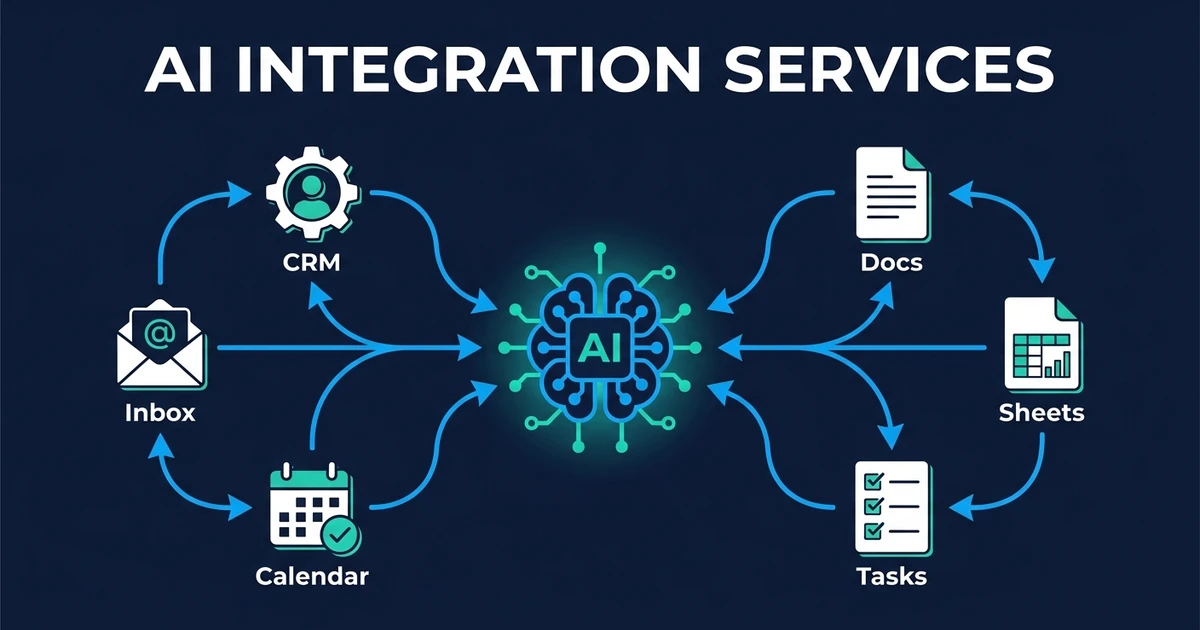
The AI integration service should begin with these contracts rather than a generic “sync all fields” connector.
Build Durable Identity Mapping
Identity is usually harder than transport.
Maintain a cross-reference table with internal integration IDs and the corresponding CRM, policy-system, producer, and external-party IDs. Keep the role and effective dates where relevant. Use identifiers supplied by the systems instead of repeatedly matching on editable text.
When a new record arrives:
- Match an existing cross-system ID if present.
- Apply approved deterministic rules, such as a verified customer number.
- Normalize permitted fields such as email, phone, and address for comparison.
- Score possible matches without automatically merging uncertain records.
- Route ambiguous cases to a reviewer with the evidence behind each candidate.
Names change, households share contact details, businesses have similar legal names, and one producer may appear in several branches. Fuzzy matching can suggest a candidate; it should not silently join two insurance customers.
Choose the Events That Matter
Event-driven integration is usually clearer than copying every record on a timer. Define only the events needed for an actual business workflow.
Examples include:
- Submission created or assigned
- Quote offered, revised, accepted, or declined
- Policy bound and issued
- Endorsement requested and completed
- Policy cancelled, non-renewed, or reinstated
- Renewal window opened, terms offered, and renewal completed
- Claim reported or status milestone changed, when permitted and useful
- Producer or servicing team changed
Each event should have a unique event ID, event type, source timestamp, object identifier, schema version, and allowed payload. Consumers must tolerate duplicate delivery and out-of-order events.
Do not use a CRM status as a substitute for a policy lifecycle status. Translate source events into CRM tasks or service states while keeping the official policy value clearly attributed to the policy system.
Use Insurance Standards Where They Fit
Common data definitions can reduce bespoke mapping, but a standard is not a complete integration design.
ACORD publishes insurance data standards for different segments and processes. Its Property & Casualty materials describe AL3 for batch communication and XML structures for real-time request and response messages, with transaction specifications and implementation guidance for processes such as policy change and renewal. Review the current ACORD P&C standards information and applicable licensing before implementation.
Use the standard version and subset required by your counterpart or platform. Add an internal canonical model only when it reduces the number of pairwise mappings. Document extensions explicitly; do not label a custom payload “ACORD compliant” without verification.
Keep AI in Bounded Roles
AI can help with unstructured inputs that surround the integration:
- Classify an incoming policy-service email.
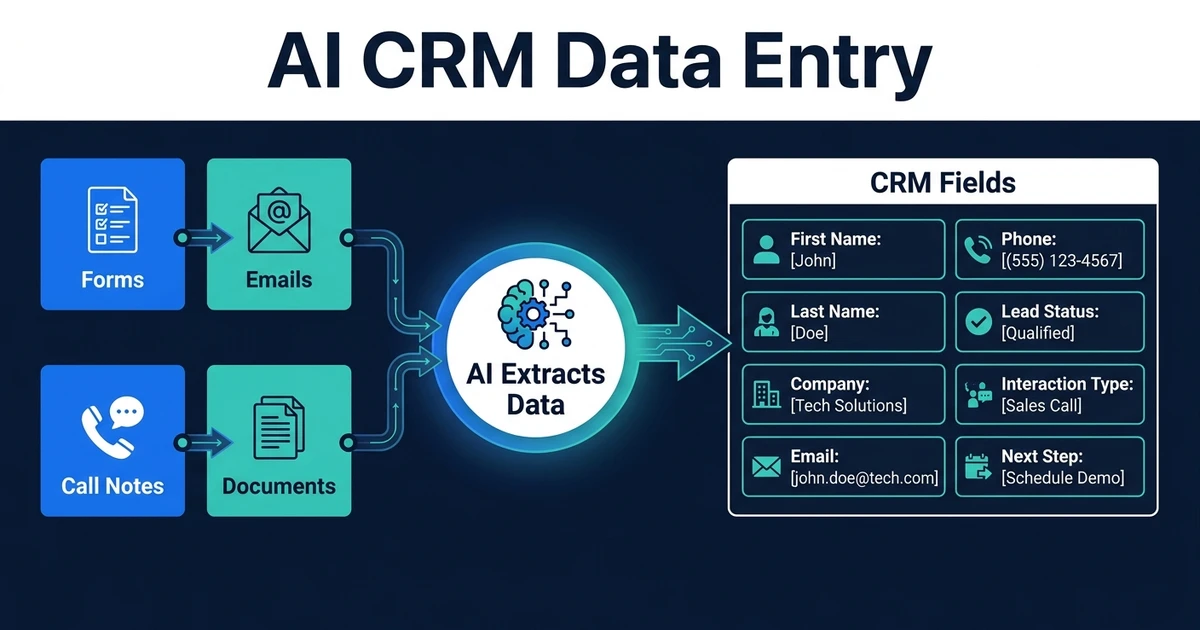
- Extract requested changes from a document into proposed fields.
- Summarize policy context for a service task.
- Map a free-text reason into an approved category.
- Identify likely missing information.
The output should be a proposed structured record with confidence and source evidence. Deterministic rules must validate identifiers, dates, codes, allowed values, and required fields before any write.
Do not let a model infer that coverage exists, that an endorsement is effective, or that a customer has consented. Those facts require authoritative records and authorized workflows.
Make Every Write Idempotent and Traceable
Networks fail, APIs time out, and message brokers redeliver events. The integration must be safe to retry.
For each operation:
- Store a unique source event or command ID.
- Check whether it has already completed.
- Validate the target object and current version.
- Apply the allowed update.
- Record the target ID, result, and timestamp.
- Retry temporary failures with limits and backoff.
- Send unrecoverable failures to a dead-letter or exception queue.
A timeout is not proof that the target write failed. Query by idempotency key or source reference before retrying a create operation.
Separate Data Sync From Customer Communication
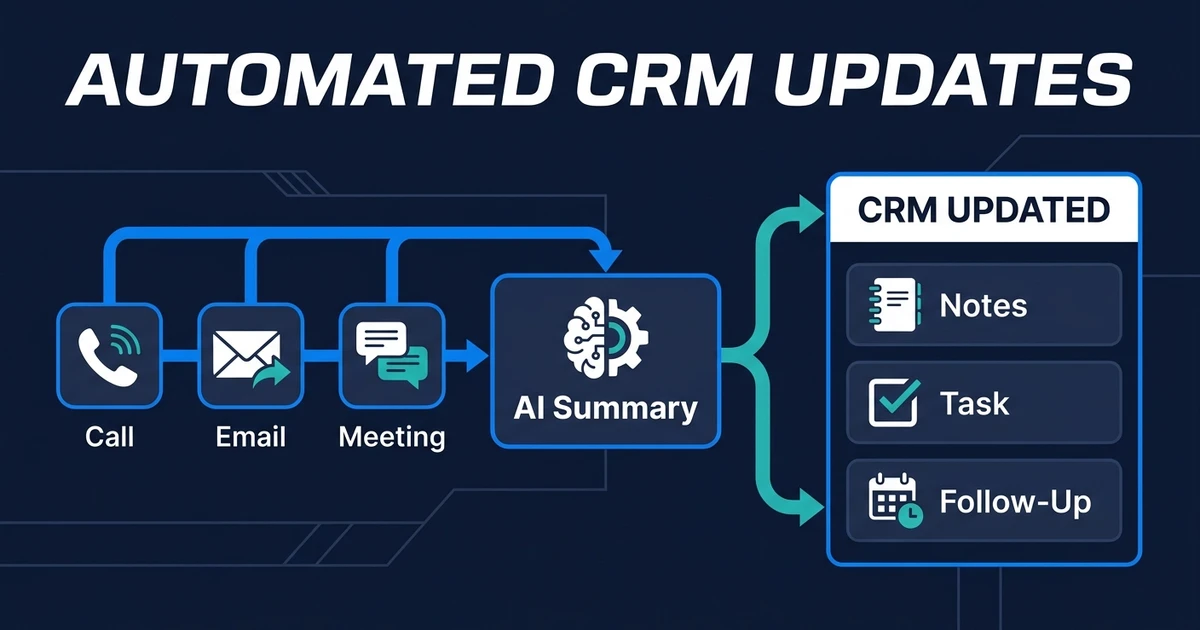
A policy event may trigger a CRM task or communication journey, but the integration should not send a message merely because a field changed.
Before communication, check:
- Whether the event is final or provisional
- Product, jurisdiction, channel, and template rules
- Consent, suppression, and communication preference
- Existing open service cases
- Intended recipient and verified contact method
- Whether agent, underwriter, or compliance review is required
The CRM can orchestrate the task while an approved communication service controls delivery and records the outcome. Keep a human approval boundary for material coverage, pricing, claim, cancellation, and regulatory communications.
Protect Sensitive Data by Design
Copy only the fields the receiving workflow needs. A sales or relationship user may need policy number, product, status, dates, and servicing contact without needing detailed underwriting, claims, payment, health, or identity documents.
Apply:
- Least-privilege service and user access
- Field- and role-level restrictions where supported
- Encryption in transit and at rest
- Secret rotation and environment separation
- Audit logs for reads and writes
- Retention and deletion rules based on legal and business requirements
- Masked non-production data
- Vendor and subprocess review
Insurance obligations vary by product, data type, contract, and jurisdiction. Treat this architecture as operational guidance, not a legal or regulatory conclusion.
Reconcile Even When Events Look Healthy
Event dashboards can be green while systems disagree because an event was never emitted, a manual edit bypassed the integration, or a schema change dropped a field.
Run scheduled reconciliation for the critical scope:
- Active policy identifiers and terms
- Status and effective or expiry dates
- Customer and policy relationship mappings
- Servicing owner or producer mapping
- Renewal tasks expected from policy milestones
- CRM records with no policy counterpart and vice versa
Classify differences as timing, expected ownership, mapping error, failed processing, unauthorized change, or unknown. Give each difference an owner and preserve the resolution.
Operate an Exception Queue
An integration exception should show:
- Source and target records
- Event and schema version
- Proposed change
- Failed validation or conflict
- Relevant prior attempts
- Safe actions: retry, correct mapping, link identity, ignore with reason, or escalate
Restrict destructive actions such as merges and overwrites. A reviewer should see the consequence before confirming it.
Metrics for the Integration
Track both technical health and business completion:
- Event processing lag and throughput
- Success, retry, and dead-letter rates
- Duplicate events suppressed
- Unmatched and ambiguous identities
- Validation failures by field and source
- Field conflicts and reconciliation differences
- Exceptions ageing by owner
- Renewal or service tasks created on time
- Unauthorized or denied access attempts
- Customer-facing communications blocked or corrected
Set alerts around consequences, not only infrastructure. A quiet queue can still be a failure if no renewal events arrived when expected.
What a Production Integration Partner Should Deliver
Insurance buyers should ask for an operating system, not only mappings and middleware:
- Current-state workflow, system inventory, and data classification
- Business-object, identity, and source-ownership models
- Versioned schemas and supported API or event contracts
- Security, permissions, environments, secrets, and audit design
- Representative integration and reconciliation tests
- Idempotency, retries, dead-letter handling, observability, and replay
- A usable identity and exception-review path
- Deployment, rollback, incident, and recovery procedures
- Customer-controlled access, agreed code and infrastructure, documentation, and training
- Clear responsibility for stabilization, support, and eventual transition
Compare the named people and production obligations behind every proposal. If the shortlist includes Kumo, the Automiq AI vs Kumo comparison shows what to verify across engineering scope, AI controls, commercial structure, ownership, evidence, and handover. Automiq can begin with an assessment or bounded production milestone when policy, data, or platform evidence must be resolved before a larger build.
Frequently Asked Questions
Which system should be the source of truth?
Assign ownership by object and field. The CRM may own relationship activity; the policy administration system should remain authoritative for issued policy and lifecycle facts.
What policy data should sync to the CRM?
Only the data needed for an approved service, relationship, or renewal workflow. Minimize sensitive and detailed policy data and enforce access rules.
How are duplicate customers prevented?
Use durable cross-system IDs, deterministic matches where possible, normalized comparison fields, and human review for uncertain candidates.
Can AI map policy data into CRM fields?
It can propose mappings from unstructured content. Fixed schemas, allowed values, validation, evidence, and review should control writes to official records.
How is the integration monitored?
Monitor processing and lag, then reconcile critical records on a schedule. Track identity, validation, conflict, security, and business-workflow exceptions.
When is a custom integration layer justified?
Use native capability when it represents the workflow reliably. Build a custom layer when policy relationships, several systems, event-driven actions, permissions, reconciliation, or a differentiated service process cannot be handled safely by the available connector.
Integrate Around Ownership, Not Convenience
The goal is not to make the CRM look like the policy system. It is to give each team the context and next action it needs while preserving authoritative policy facts, controlled access, and a traceable path between records. The finished system must be supportable after its original builders step away.
Book a 30-minute call with Automiq AI to define a bounded policy administration and CRM milestone around your platforms, data responsibilities, service workflow, and production ownership.