Quick Answer: Moving an AI proof of concept into production means proving the system can work with real users, real data, real permissions, real failure paths, and measurable business value. A pilot should not be funded for production until it has acceptance criteria, evaluation data, integrations, monitoring, cost controls, and a named owner. The right next step is usually a narrow production slice, not a bigger demo.
Your AI demo worked. But it is not the buying decision.
The AI POC to production decision starts when someone asks whether the path is worth funding. The question changes from “can this model do the task once?” to “can our business depend on this system when customers, staff, messy data, and cost pressure arrive together?”
Automiq AI works with teams at this exact moment. The common mistake is funding more demo scope when the real work is production architecture.
Why AI POCs Stall Before Production
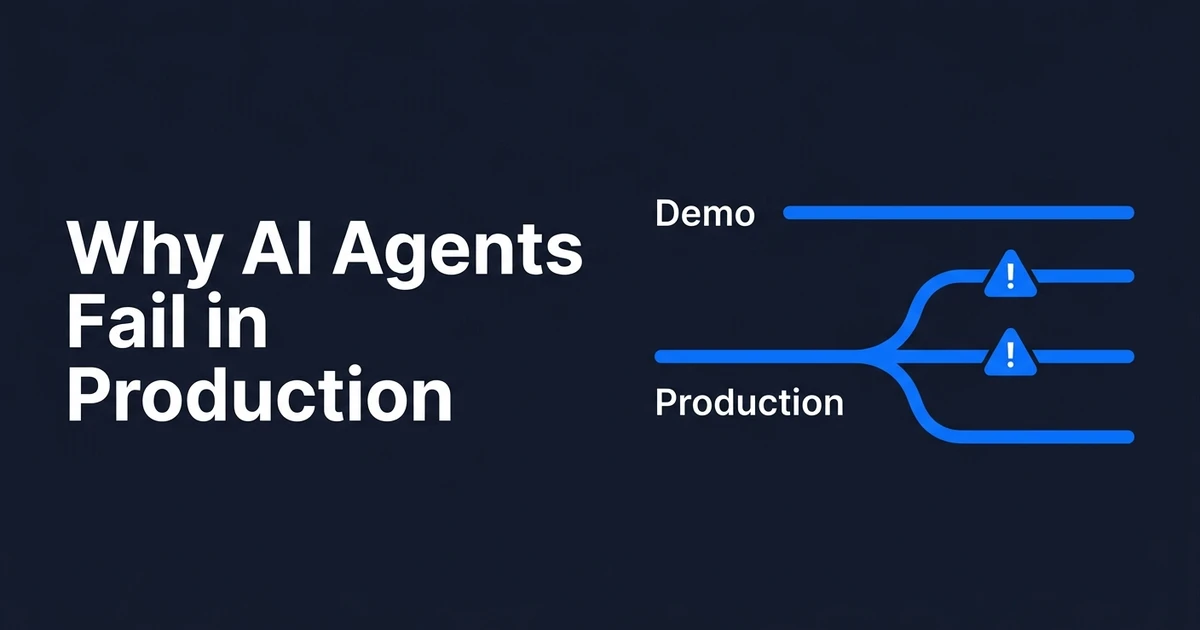
AI pilots usually stall because the proof of concept was built to prove possibility, not dependency. It used sampled data, friendly inputs, one or two workflows, and a human close enough to fix awkward moments.
Production removes that protection. The system now needs permissions, audit trails, retry logic, integration boundaries, cost controls, and a way to tell whether an output was actually good.
This is not a rare failure pattern. S&P Global Market Intelligence found that the proportion of companies abandoning most of their AI initiatives before they reach production rose from 17% to 42%, with the average organization scrapping 46% of proof-of-concept projects prior to production.
McKinsey’s latest State of AI survey shows the same tension from another angle: 44% of respondents report AI scaling across the enterprise, while 37% report that AI has contributed positively to their organizations’ EBIT. More AI activity does not automatically mean more business impact.
What Has to Change Before an AI Pilot Becomes a Product
A production AI system needs a contract with the business. That contract says what the system is allowed to do, what a correct outcome means, when a human must review it, and what happens when the model is uncertain or wrong.
That is different from a prompt, a prototype, or a notebook. It is closer to product engineering: user roles, data access, integration states, release gates, logs, rollback, and ownership.
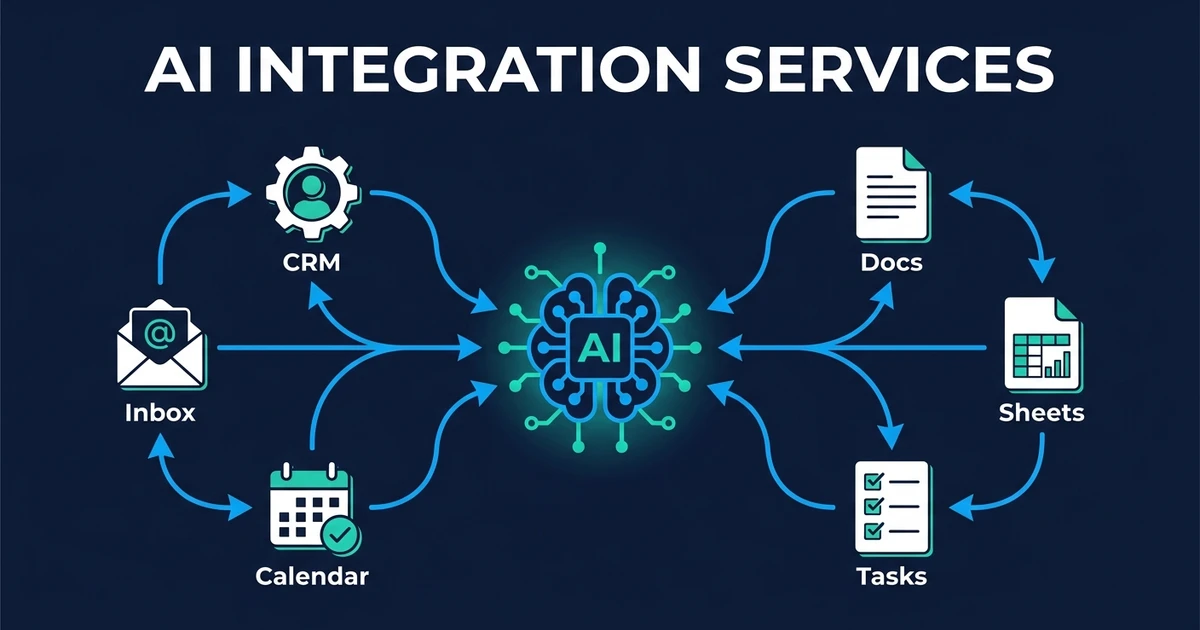
For example, a support triage pilot can look impressive when it classifies sample tickets. In production, it needs access to CRM records, billing status, product telemetry, escalation rules, and audit logs. It also needs to know when not to answer.
The hard part is not always intelligence. It is operational control.
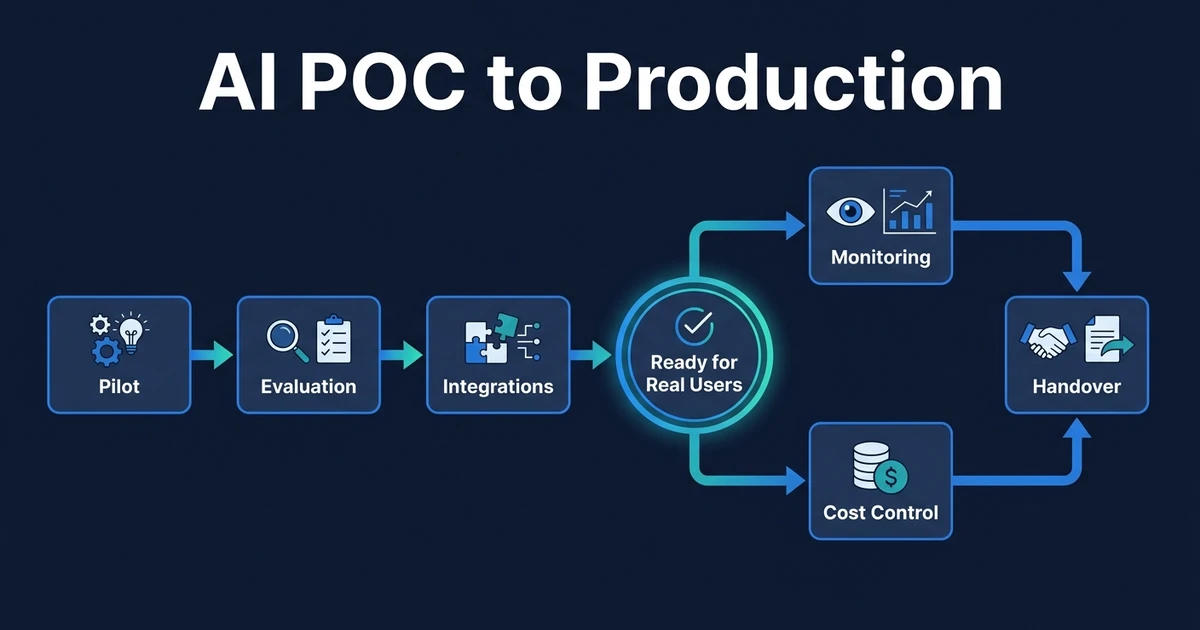
The AI POC to Production Checklist Buyers Should Use
Use this checklist before you approve the next build milestone. If your team or vendor cannot answer these plainly, the project is not ready for broad rollout.
| Production check | What you need to hear | Why it matters |
|---|---|---|
| Business metric | The workflow is tied to a measurable outcome | Prevents funding novelty instead of value |
| System owner | One person owns release and operation | Avoids orphaned pilots |
| Real data path | The system can safely read the data it needs | Removes copy-paste demos |
| Permission model | Users and AI actions have bounded access | Protects customer and business data |
| Evaluation set | Outputs are tested against known cases | Makes quality measurable |
| Failure path | Bad outputs route to humans or safe defaults | Keeps errors contained |
| Monitoring | Runs, errors, latency, and cost are visible | Finds drift before users do |
| Cost ceiling | Usage has budgets and model routing rules | Prevents surprise operating cost |
| Integration plan | CRM, product, support, or finance systems are mapped | Makes the AI part of the business workflow |
| Handover package | Code, docs, environments, and runbooks are included | Gives your team ownership |
This is where AI product and platform engineering becomes different from a pilot build. The deliverable is a system your team can run.
Get a production readiness review before you fund the next phase. Automiq AI will help you decide whether to productionize the pilot, narrow it into a safer production slice, or stop before the expensive part.
What a Production Slice Looks Like in a Real Business
Take a B2B SaaS team with an AI support triage pilot. The demo reads incoming tickets, summarizes the issue, predicts urgency, and drafts a reply. Internal stakeholders like it because the output looks close to useful.
The production slice should not automate the entire support function. It should handle one bounded workflow, such as routing billing-related tickets to the right queue with a suggested summary and confidence score.
That slice needs real integrations: support inbox, CRM, billing system, user account data, and staff review. It also needs a release gate: if confidence is low or the account is high value, the AI drafts but does not route.
The win is not that the AI “does support.” The win is that the team removes triage work, reduces missed escalations, and sees where the model is reliable enough to expand.
When You Should Not Productionize the Pilot Yet
Do not productionize the pilot if the workflow does not matter commercially. If the best case saves a few minutes on work nobody is blocked by, a production build will create more surface area than value.
Do not productionize it if your source data is not trusted. AI will not rescue duplicated customer records, unclear ownership, stale documents, or permissions nobody understands.
Do not productionize it if users already reject the output. That is not a prompt issue by default. It may mean the workflow is poorly chosen, the user experience is slower than the current habit, or the AI is being asked to make a judgment your team does not accept from software.
The honest answer may be to pause and fix the workflow first.
How Automiq AI Turns a Working AI POC Into Production Software
Automiq AI starts by separating the useful signal in the pilot from the parts that were only demo scaffolding. Then we define the smallest production slice that can prove value under real conditions.
That usually means evaluation cases, integration design, permission boundaries, model routing, observability, deployment, and handover. For agentic systems, it also means state handling, tool-call validation, and retry rules.
We do not lock you to one model provider. We design production AI so the model is a replaceable part of the architecture, not the whole architecture.
Handover matters as much as the build. You should own the repository, infrastructure access, documentation, evaluation process, and operating knowledge.
Frequently Asked Questions
What does moving an AI proof of concept into production mean?
It means turning a working AI proof of concept into software your business can safely run with real users, real data, integrations, monitoring, and ownership. The work is less about making the demo bigger and more about adding the engineering controls that let the system survive normal business use.
How do I know if my AI pilot is ready for production?
Your pilot is ready when it has a clear business metric, a tested evaluation set, secure access to real systems, defined failure handling, cost visibility, and an owner for day-to-day operation. If those are missing, the next milestone should be a production slice rather than a wide rollout.
Should an AI proof of concept be rebuilt before launch?
Sometimes. If the prototype has useful product logic but weak infrastructure, it may only need hardening. If the data model, security model, or workflow design is wrong, rebuilding the production path is usually cleaner than trying to patch a demo into a live system.
What should I ask an AI implementation partner?
Ask what success metric they will build around, how they test outputs, what happens when the model is wrong, how costs are monitored, and what your team receives at handover. Specific answers matter more than polished claims about AI expertise.
Can my internal team maintain the production AI system after handover?
Yes, if handover is designed from the start. Your team should receive the repository, architecture notes, environment documentation, evaluation process, deployment steps, and enough operating knowledge to change the system without calling the original builder for every small move.
Conclusion: Fund the System, Not Another Demo
An AI proof of concept earns the next milestone only when it has a believable path into production. That path should include business value, real integrations, testing, monitoring, operating cost, and ownership.
If your pilot has that shape, fund the system around it. If it does not, narrow it before you widen it.
Book a production readiness scoping call and get an honest read on whether your AI pilot should move to production, become a smaller production slice, or stop before more budget is spent.