Quick Answer: A vibe coded app audit is a production readiness review for an application built with AI coding tools. It checks security, authentication, data access, architecture, dependencies, deployment, logging, maintainability, and ownership. The point is not to shame the prototype. It is to decide what can ship, what needs hardening, and what should be rebuilt before real users touch it.
The app looks finished. The dashboard loads, the buttons work, and the demo flow reaches the core feature.
That does not mean it is safe to launch. An audit exists for the moment when your AI-built product has moved from “this is impressive” to “people might actually use this.” Automiq AI treats that as an engineering question, not a vibe check.
Your AI-Built App Is Not Production-Ready Because It Looks Finished
AI coding tools are excellent at visible progress. They create screens, wire flows together, and restore momentum before you have validation.
The hidden risk is that production readiness mostly lives behind the interface. A finished-looking app can still expose private records, skip payment verification, store secrets in the wrong place, or depend on code nobody can maintain.
Stack Overflow’s developer survey gives useful context. It found that more developers actively distrust the accuracy of AI tools, at 46%, than trust them, at 33%. Experienced engineers are not anti-AI. They know generated output needs review when accountability matters.
That is the gap an audit closes. It tells you whether the prototype is a base to harden or a demo to learn from.
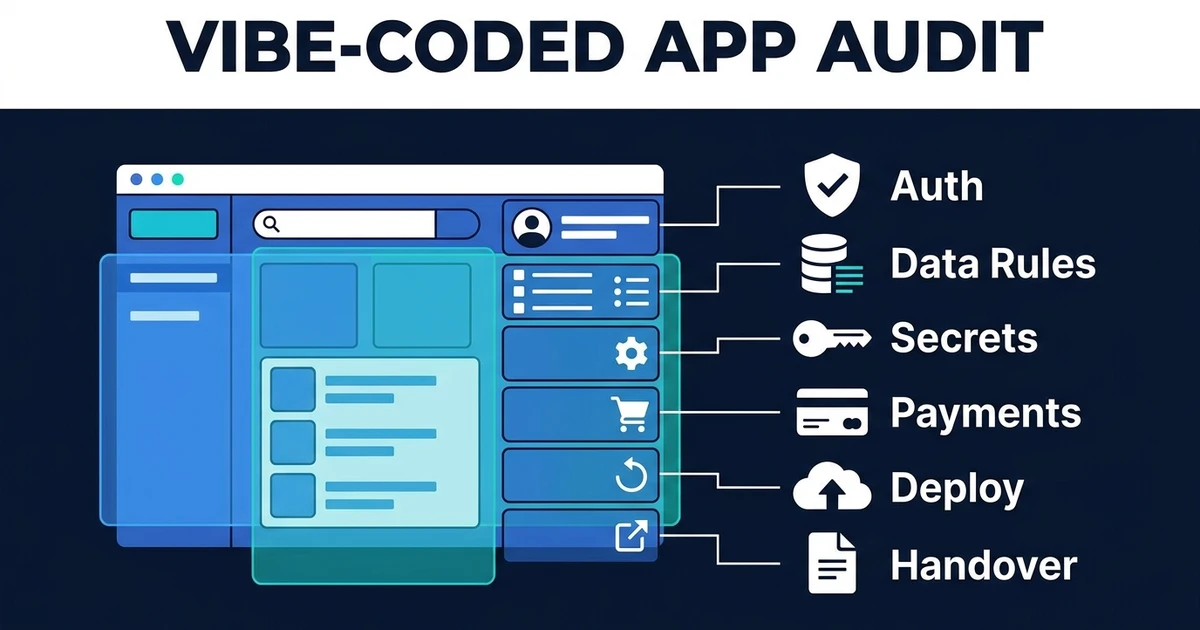
What a Vibe Coded App Audit Actually Checks
The audit should start with ownership. Do you have the repository, environment variables, database access, deployment account, and documentation to run the app independently?
Then it should check the parts that break quietly:
- Authentication and role permissions
- Database rules and record-level access
- API secrets and environment configuration
- Payment webhooks and subscription states
- Third-party dependencies and package risk
- Error handling, logging, and rollback
- Test coverage for revenue-critical flows
- File uploads, storage, and public/private access
- Deployment process and production environment separation
- Code structure a future engineer can understand
This is where vibe-coded to production engineering earns its keep. The deliverable is a verdict on what the code can become.
The Security Risks Found in AI-Generated App Builds
The most common security risks are ordinary software risks wearing new clothes. Broken authorization, leaked keys, and unverified payment webhooks still create real business risk.
AI adds a few extra surfaces. The OWASP GenAI Security Project lists 2025 risk categories including prompt injection, sensitive information disclosure, supply chain, improper output handling, excessive agency, system prompt leakage, vector and embedding weaknesses, misinformation, and unbounded consumption.
NIST’s Generative AI Profile frames risk as a lifecycle issue. The profile is designed to help organizations incorporate trustworthiness considerations into the design, development, use, and evaluation of AI products, services, and systems.
For a founder, the practical question is simple: can an ordinary user see, change, trigger, or spend something they should not? If the answer is unknown, the app is not ready.
Request a production readiness audit before you put private data, payments, or investor diligence on top of generated code. Automiq AI will separate launch blockers from issues that can wait.
How to Decide Whether to Harden, Refactor, or Rebuild
Not every AI-built app needs a rebuild. That would waste the exact speed that made the prototype valuable.
Use this triage:
| Audit outcome | Choose this when | What happens next |
|---|---|---|
| Harden | Core architecture is sound and risks are localized | Patch security, add tests, clean deployment, document handover |
| Refactor | Product logic is useful but implementation is tangled | Keep the working flows, rewrite weak modules, improve data boundaries |
| Rebuild | Auth, data model, or core workflow is wrong | Preserve learnings, rebuild the production path in owned custom code |
If the app has good domain logic but messy components, keep it. If the database is shaped around demo convenience instead of the business, rebuild that part before it hardens into permanent debt.
This is also where owned custom software development may become the right move. The goal is code your team can operate, not code that only survives inside the original prompt history.
What Founders Usually Miss Before Inviting Real Users
Imagine a marketplace prototype built with an AI app generator. Signup works, listings display, and a demo booking can be created.
The audit finds a different story. Ordinary users can access admin-only listing data. API keys live in client-side code. Payment events lack webhook verification. A deleted listing leaves orphaned bookings.
Those problems show up when real users behave differently from the founder, when an investor asks about data security, or when the first customer uses the app in a way the generated code never anticipated.
That is why the audit has to map code to business risk. The question is “what could this code cost us if we launch it as-is?”
When You Do Not Need a Full Audit Yet
If the app is still disposable, keep building. You do not need a full audit for a demo with no users, private data, payments, production promises, or investor review coming up.
You also may not need an audit if your next milestone is product discovery. Watch users try the workflow before polishing code nobody may keep.
Buy the audit when risk enters the room: real accounts, customer data, money movement, regulated workflows, or technical diligence.
Before that point, speed is the feature. After that point, hidden risk becomes the feature your users will notice first.
How Automiq AI Takes Vibe-Coded Apps to Production
Automiq AI starts with a production readiness review of the existing repo and runtime. We look for launch blockers, repairable weaknesses, and structural issues that should not be patched.
Then we create a plan around the safest path: harden, refactor, or rebuild. That can include auth repair, database redesign, dependency cleanup, environment separation, deployment, tests, monitoring, documentation, and handover.
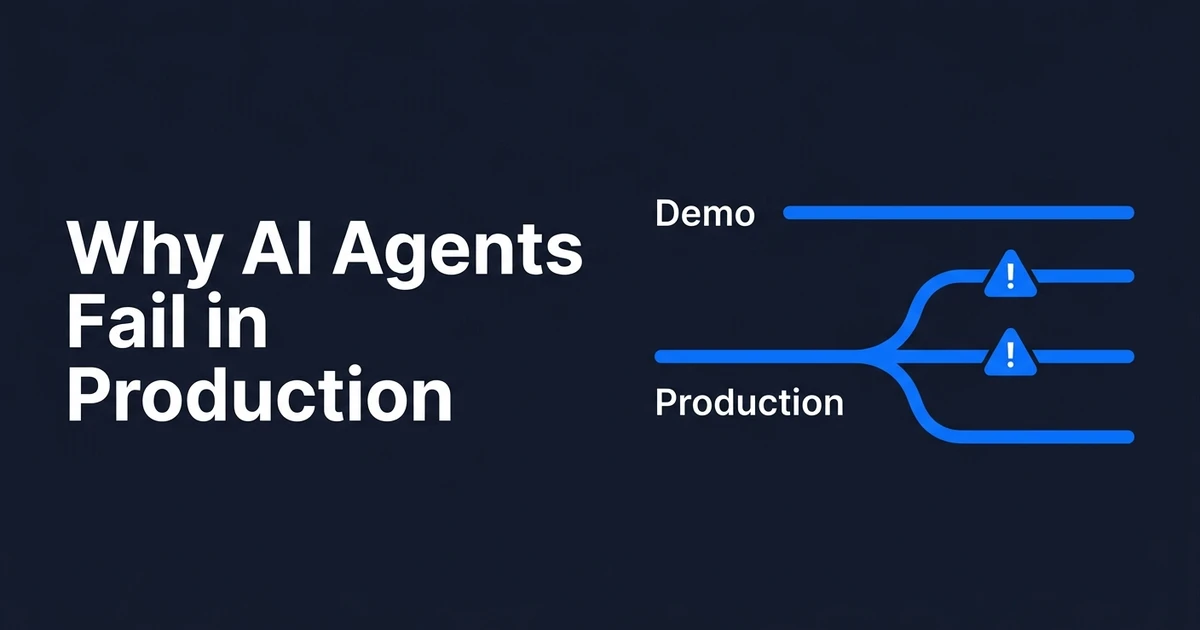
If the product includes AI agents or LLM features, we also review tool permissions, prompt boundaries, output validation, retrieval quality, and cost control. Those are the areas where AI agent production failure modes get expensive fast.
The best outcome is controlled momentum. Keep what helped you validate the idea. Replace what could hurt the business.
Frequently Asked Questions
What is an AI-built app audit?
It is a senior engineering review of an AI-built application before real users depend on it. It checks security, architecture, data rules, authentication, maintainability, deployment, and ownership so you know what can ship and what needs repair.
Can AI-generated code be production-ready?
Yes, but only after the same checks you would apply to any serious software build. The question is not whether AI helped write the code. The question is whether the system protects data, handles failures, can be maintained, and can be handed over cleanly.
Should I rebuild my vibe-coded app from scratch?
Not automatically. If the product logic is sound and the structure is understandable, hardening or refactoring may be enough. If the auth model, database design, or core workflow is wrong, rebuilding the production path is usually safer.
What should I prepare before an AI-generated code audit?
Prepare repository access, environment notes, a demo login, known issues, database schema, third-party integrations, and the flows you expect real users to complete. The audit is faster when the reviewer can compare the code against the business workflow.
Can Automiq AI work with my existing AI-built repo?
Yes. Automiq AI can review the repo, identify reusable parts, harden the path, or rebuild risky parts. The goal is to preserve momentum without pretending every generated shortcut is safe.
Conclusion: Keep the Speed, Add the Engineering
Your AI-built app may be a strong start. It may also contain hidden assumptions that appear once real people, private data, payments, and uptime expectations arrive.
The right move is not panic. It is review.
Book a scoping call and Automiq AI will assess what your AI-built app can keep, what needs hardening, and what should be rebuilt before launch.