EN
EN DE
DE ES
ES FR
FR NL
NL PT
PT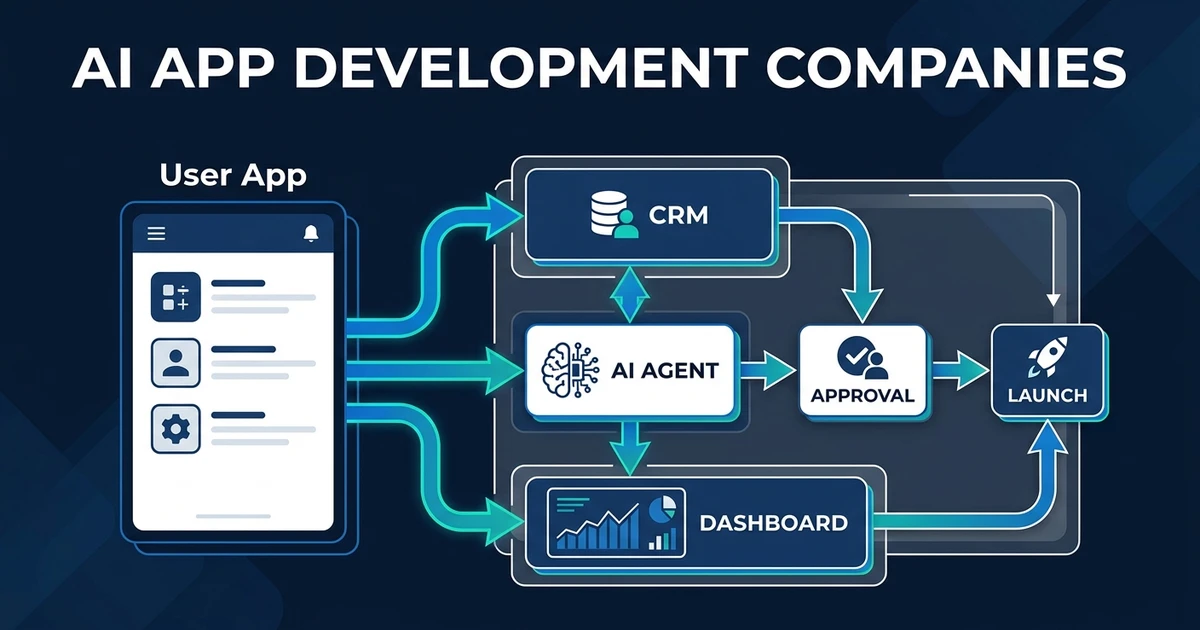
Quick Answer: The best AI app development companies do more than add a chatbot to an app. They understand the workflow the app must run, design the data and approval layers, connect the systems behind it, and build AI features that improve the product instead of becoming a demo feature no one trusts.
AI app development companies sit in a crowded category. Some build mobile apps, some build SaaS products, some build AI agents, and some mostly add AI features to existing products.
If you are comparing partners, the important question is not who can build screens. It is who can build the workflow the app is supposed to own.
Gartner predicts that 40% of enterprise applications will include task-specific AI agents by the end of 2026, up from less than 5% in 2025 in its enterprise app forecast. That shift makes workflow context more important, not less.
Why AI app development companies need workflow context
These teams need workflow context because an AI feature only works when the surrounding process is clear. A chatbot in a portal is not useful if it cannot read the right record, respect permissions, route exceptions, or update the system your team actually uses.
This is where many app projects drift. The team designs screens, adds AI, and launches a product that still requires manual checking behind the scenes. Your team gets a nicer interface, but the same operational drag remains.
A workflow-driven AI app starts with the process: intake, review, routing, approval, update, notification, reporting, and handoff. The interface becomes the visible layer on top of that operating logic.
What should an AI app development partner build for you?
An AI app partner should build more than a front end. The useful scope includes product flows, UX/UI, backend logic, data models, integrations, AI workflows, permissions, analytics, deployment, and handoff documentation.
You should also know which type of AI you are buying:
- An AI feature helps one part of the product, such as summarizing notes.
- An AI workflow moves work across steps, systems, and approvals.
- An AI product owns a repeatable user experience where AI is part of the core value.
Automiq AI can work across those layers. It can build a lightweight automation inside your current tools, a custom portal or mobile app for users, or a SaaS-style product where the software interface and automation layer work together.
McKinsey reports that organizations use generative AI across marketing and sales, product and service development, service operations, software engineering, and IT in its State of AI research. Your app partner should be able to explain which function your product improves and how that improvement will be measured.
8 AI app development partner types to compare
This list is a category map for buyers, not a universal ranking. The right partner depends on whether you need a mobile interface, custom SaaS product, internal tool, AI workflow, or full engineering team.
| Option | Best fit | Watch-out | Good first question |
|---|---|---|---|
| Automiq AI | Workflow-first custom AI apps, portals, SaaS builds, and automation-backed products | Best fit when the app is tied to operations, not a purely speculative product | Which part of our workflow should become software first? |
| KumoHQ | Production AI and software partner category comparison | Broader engineering scope may exceed a smaller first release | How would you phase automation, app, and product layers? |
| Azumo | Outsourced AI and software development for mid-market builds | Requires clear product ownership from the buyer | What team roles will be assigned after discovery? |
| Netguru | Product design and software development for startups and scaleups | Scope can grow if the workflow is not tightly defined | How will you validate the workflow before design? |
| DataArt | Large-scale custom software and data-heavy systems | Often better for bigger technical programs | How do you handle data architecture and operational handoff? |
| BairesDev | Dedicated engineering capacity for larger builds | You may need internal product and technical leadership | Who owns product decisions during development? |
| Intellectsoft | Enterprise and mobile app development | May be heavier than a first workflow product needs | How will AI actions be governed and tested? |
| TechAhead | Mobile and digital product development | Mobile-first scope can miss back-office automation | What systems will the app read from and write to? |
Names are useful for research, but the real comparison is operating model. Are you buying a product team, an engineering bench, a workflow automation partner, or a platform your team still has to assemble?
How to choose between an AI app, AI automation, and a portal
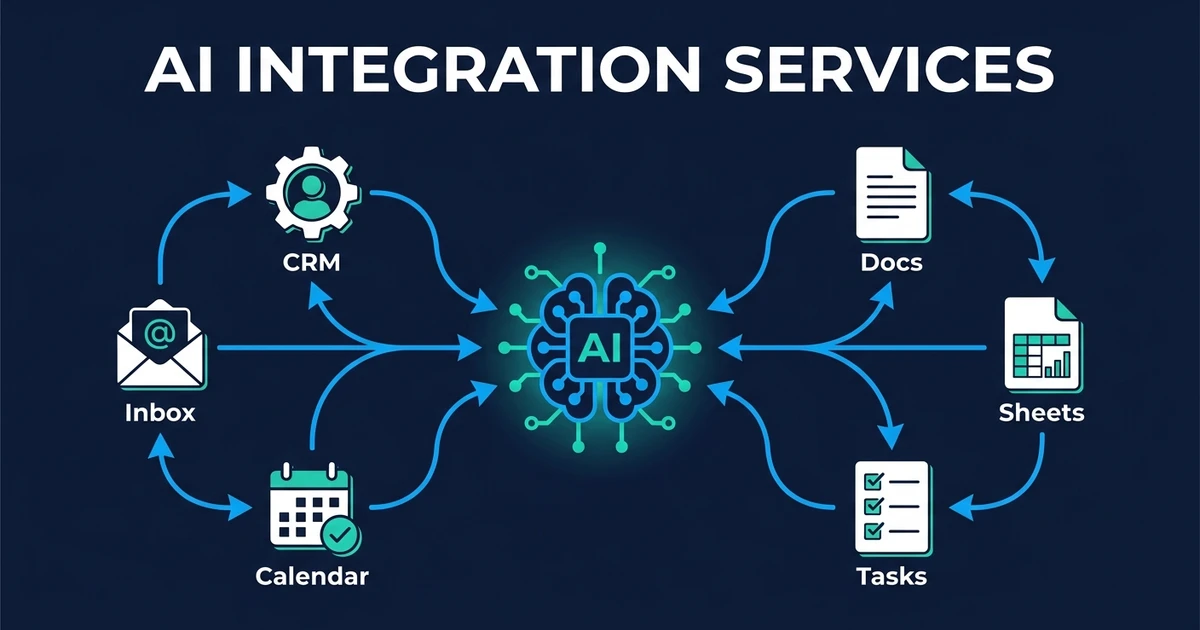
Start with the job your users need done. If the work already happens in your CRM, inbox, forms, calendar, and documents, your first build may be AI workflow automation rather than an app.

If users need one controlled place to submit information, review status, or approve work, build a portal or internal tool. If people need access in the field, at appointments, or inside a customer experience, a mobile app may be the better layer.
| Need | Better first build | Why |
|---|---|---|
| Remove repeated handoffs inside existing tools | AI automation | Fastest path to reduce manual work |
| Give customers or staff a controlled workspace | Portal or internal tool | The interface becomes part of delivery |
| Support users away from a desk | Mobile app | The workflow needs context and access in the field |
| Turn a repeatable workflow into a sellable asset | SaaS product | Users, permissions, onboarding, and roadmap matter |
Automiq AI’s AI integration services are useful when you are not sure which layer comes first. The first scoping question should be how the work moves today, not which screen to design.
What questions should you ask before hiring an AI app partner?
Use the first call to test whether the team understands workflow ownership. A strong partner will ask operational questions before talking about frameworks, models, or feature lists.
Ask:
- What business workflow does this app own?
- Which systems must the app read from and write to?
- What should AI decide automatically?
- Where should human approval be required?
- How will AI output be evaluated before launch?
- Who owns source code, data, and deployment?
- What happens after launch when the workflow changes?
Deloitte reports that only 34% of organizations are truly reimagining the business with AI, while 30% are redesigning key processes around AI in its enterprise AI report. Those numbers point to the same lesson: product work and workflow redesign need to meet.
If you are weighing app, portal, SaaS, and automation options, start with an AI implementation service that maps the workflow before you commit to a larger build.
AI app development example: from manual workflow to product
Imagine a service business that receives leads through forms, phone calls, referrals, and email. Staff qualify each inquiry, update the CRM, schedule a call, draft a proposal, and send status updates manually.
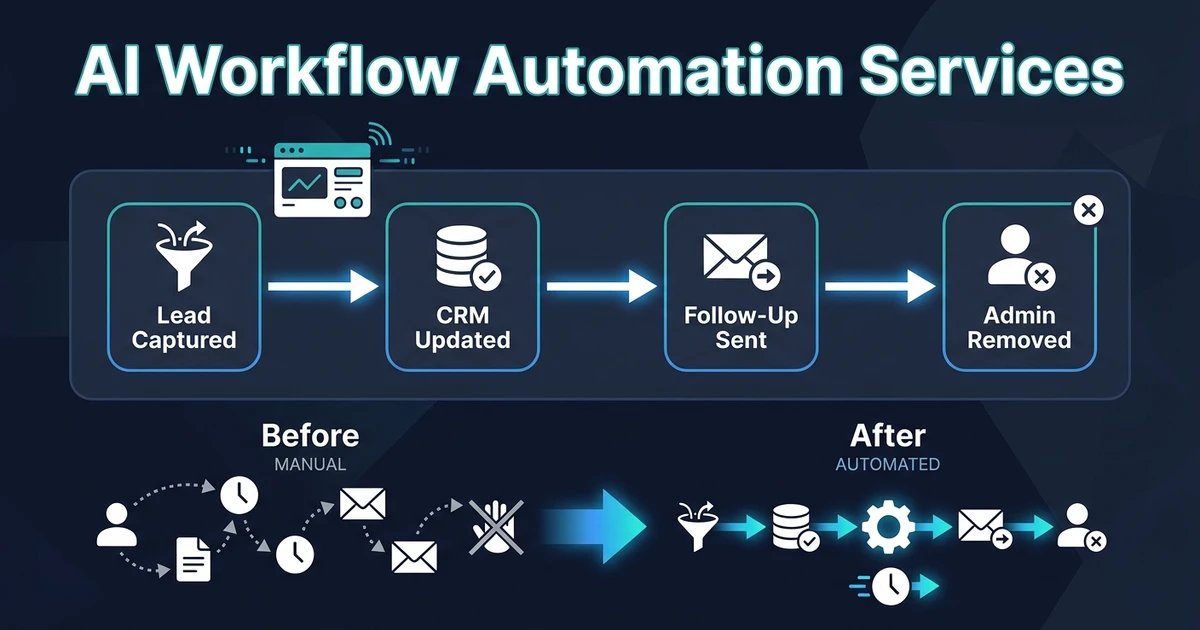
The first release might not be a full app. It could be automation that classifies the lead, updates the CRM, drafts follow-up, and creates the next task. That gives the team a working system before any custom interface is built.
The next phase could add a client portal for intake, status, uploads, and approvals. A later phase could turn the repeated workflow into a SaaS-style product for a specific market.
That sequence prevents overbuilding. Each layer exists because the workflow proved it needed one.
Frequently Asked Questions
What do AI app development partners do?
AI app development partners build web apps, mobile apps, internal tools, portals, and SaaS products with AI features or AI workflows built in. The strongest teams also handle product flows, integrations, data models, permissions, testing, deployment, and handoff.
How do I compare AI app development partners?
Compare them by workflow understanding, integration depth, AI evaluation, security, product design, code ownership, launch handoff, and post-launch support. If the company cannot explain the operational workflow behind the app, the build is at risk.
Is an AI app better than workflow automation?
Not always. Workflow automation is usually better when the work can happen inside your current tools. An AI app is better when users need a dedicated interface, mobile access, or a repeatable product experience.
Can Automiq AI build a SaaS product or mobile app?
Yes. Automiq AI can build custom SaaS products, mobile apps, portals, dashboards, and AI-powered product experiences, along with the workflow automation and integrations that make them useful.
What should I ask before hiring an AI app development company?
Ask which workflow the app owns, which tools it must connect to, what AI can decide, where approvals happen, how outputs are tested, and who owns the code after launch. The answers should be concrete enough to shape the first release.
Conclusion
The best AI app is usually not just an app. It is a visible layer on top of a workflow that has been mapped, tested, integrated, and designed for real users.
Choose the company that can own that full chain. Automiq AI can help you decide whether the first build should be automation, a portal, a mobile app, or a custom AI product. Book a scoping call with one workflow you want to turn into software.